




Remi Care
Smart Medication system for aging at home
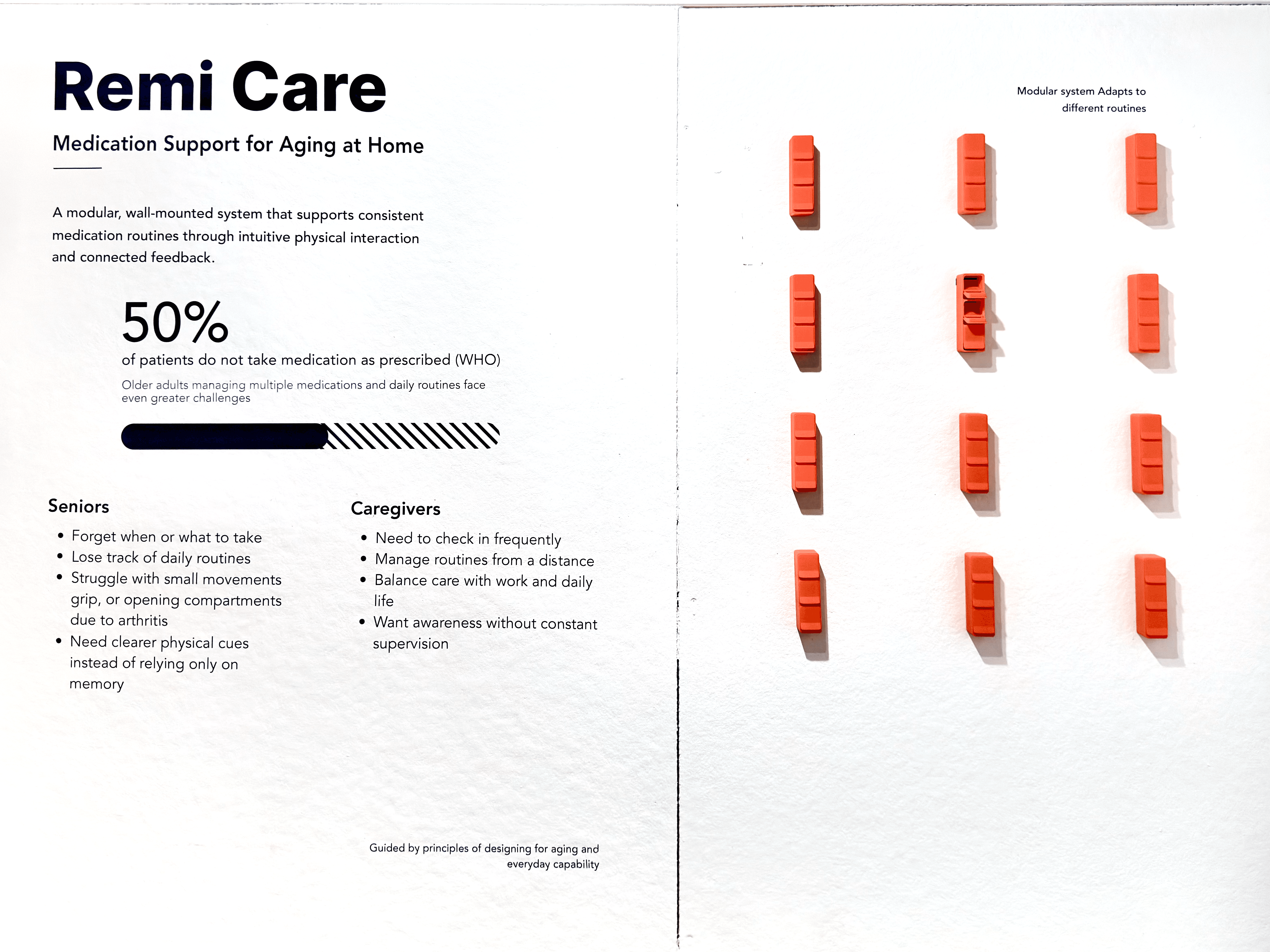
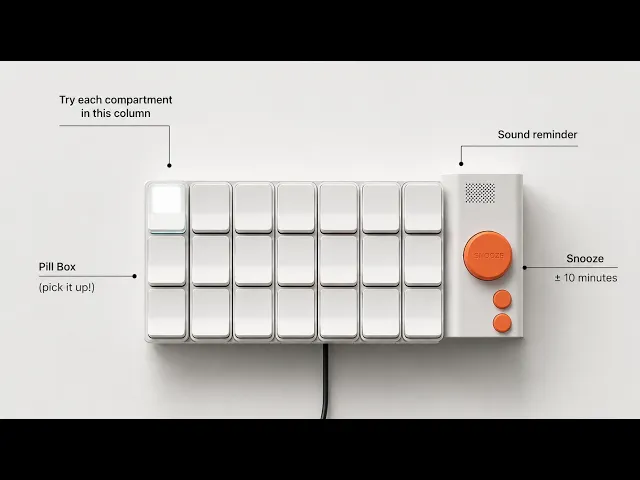
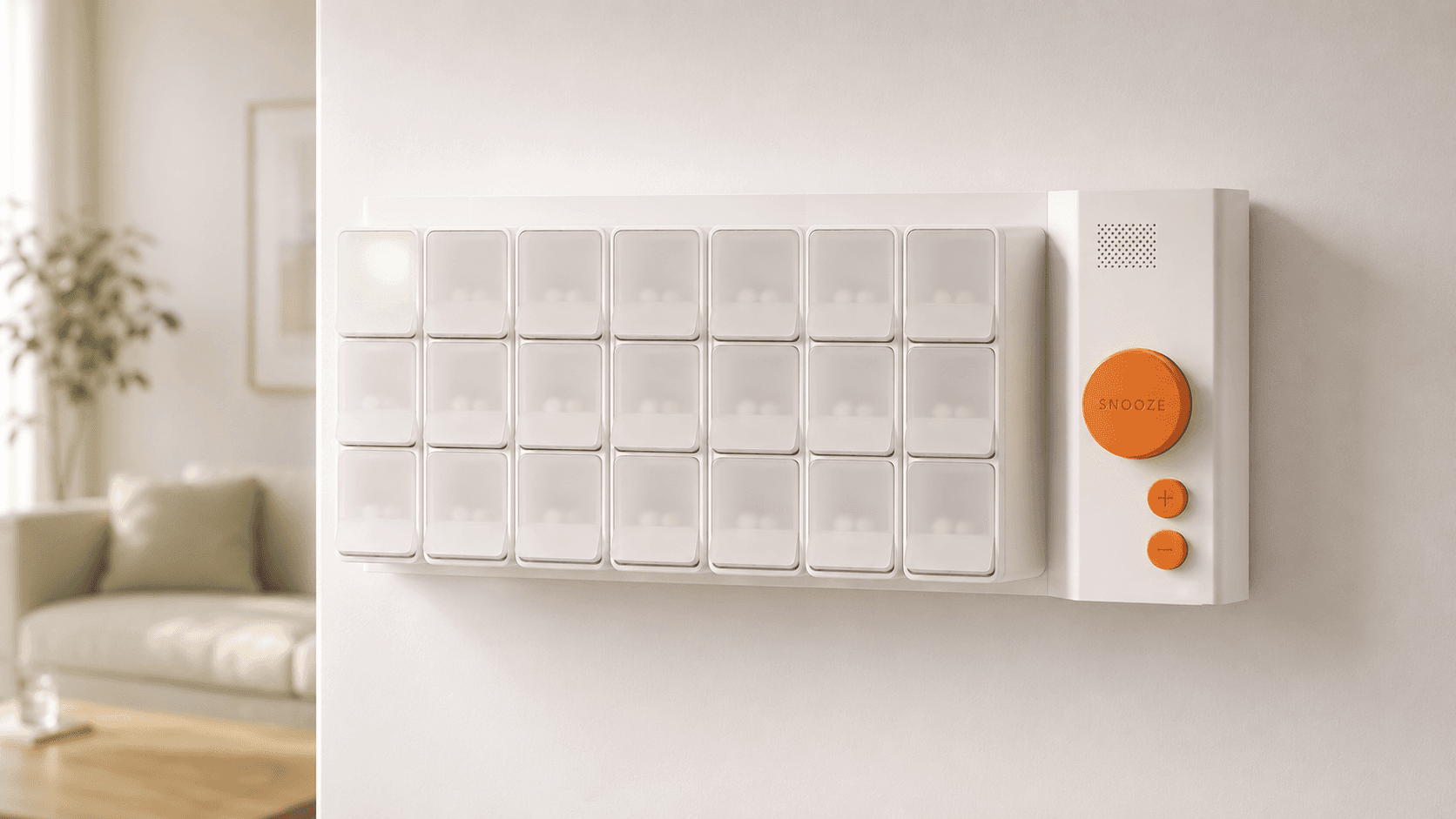
Remi Care is a modular medication system designed to reduce uncertainty in daily medication routines. Through guided lighting, responsive physical interaction, and caregiver connectivity, the system supports older adults in navigating medication with greater confidence, clarity, and independence.
CATEROGY:
Industrial Design • IoT Systems • Healthcare Experience
TIMELINE
2025-2026
SCOPE:
Research, System Design, Embedded Prototyping, and Connected Product Experience
AWARD:
Integrative Project Award
context & insight
54%
Older adults managing multiple medications report anxiety about taking them correctly.
66%
Caregivers often become aware only after routines begin to break down.
observation
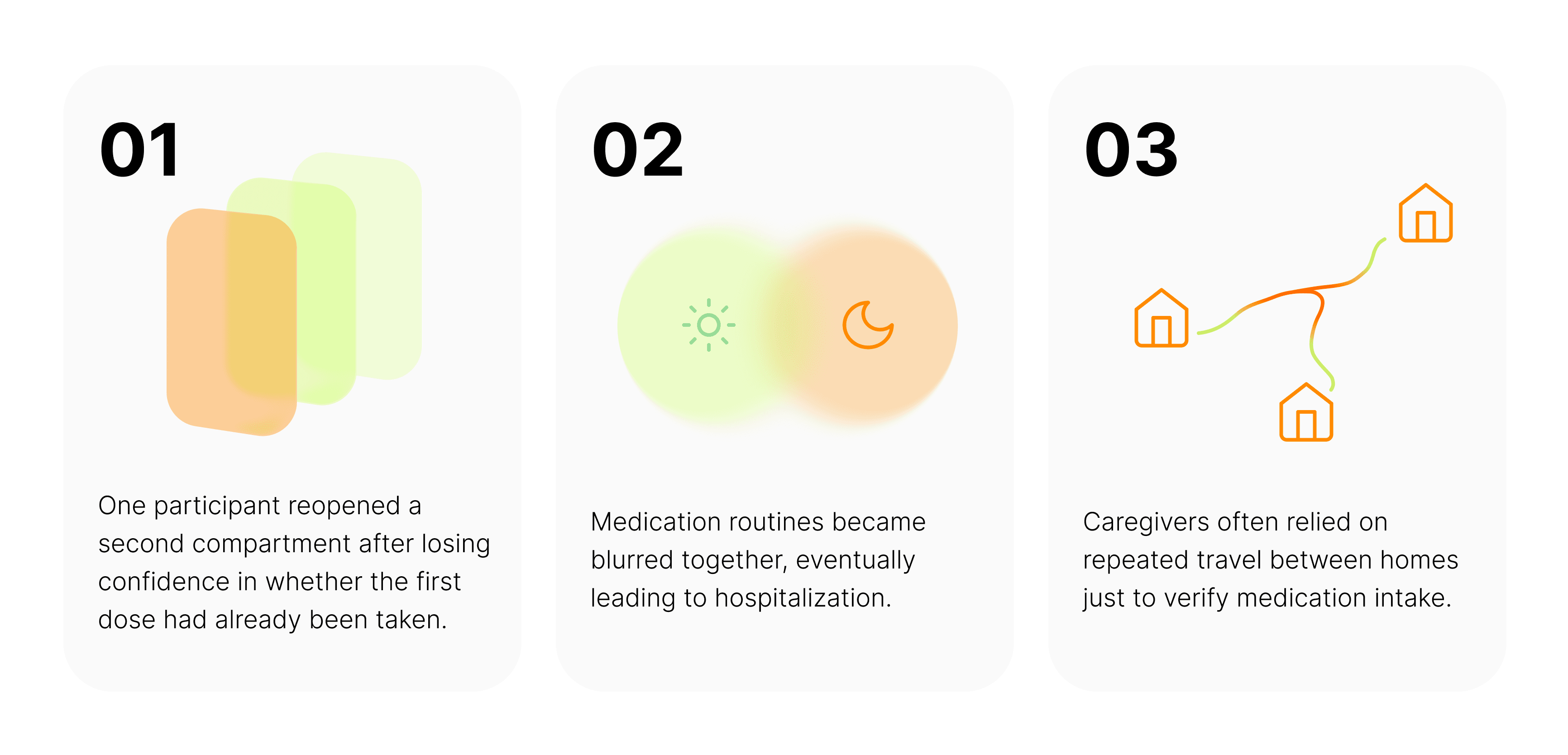
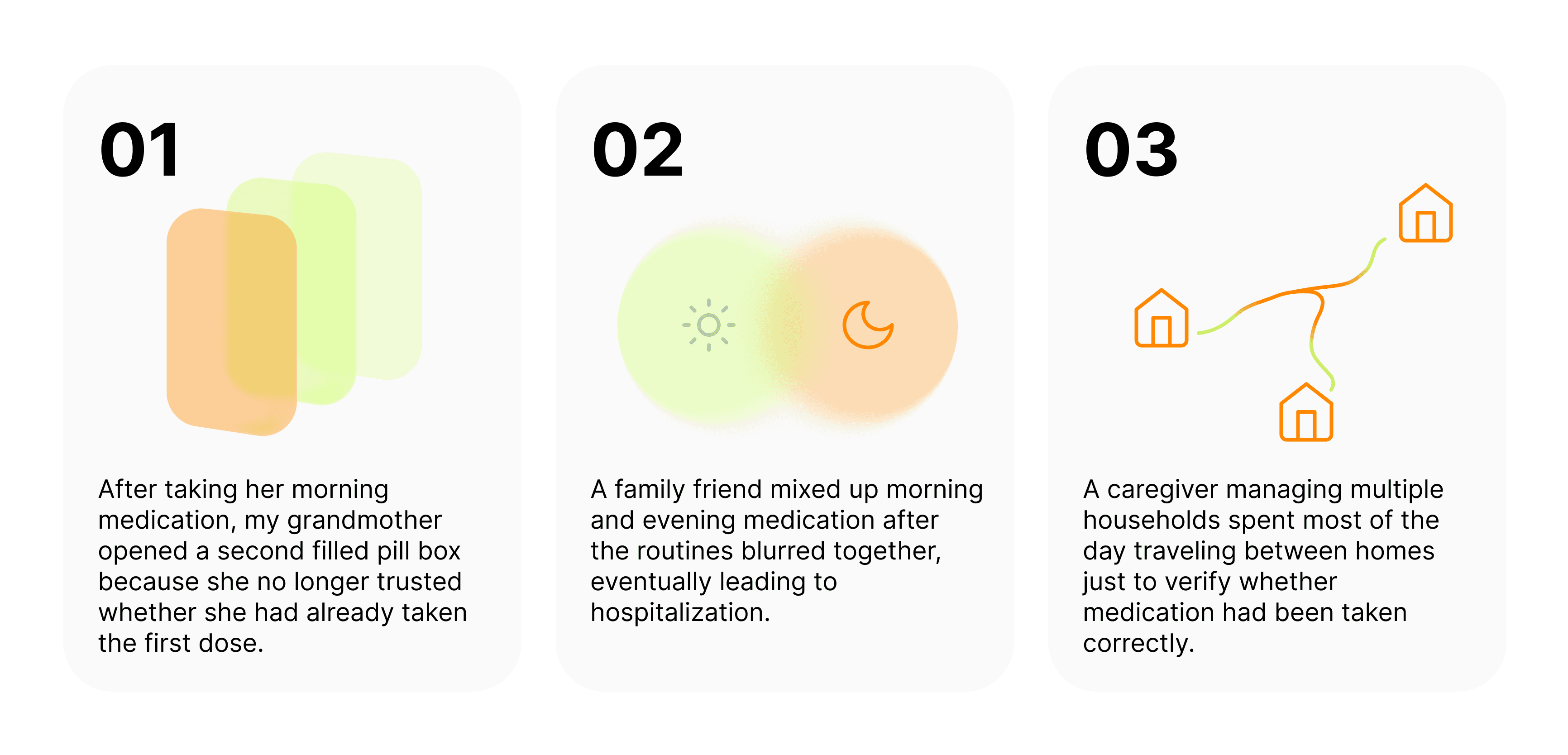
Three recurring patterns emerged across interviews and caregiving routines.

behavioral friction
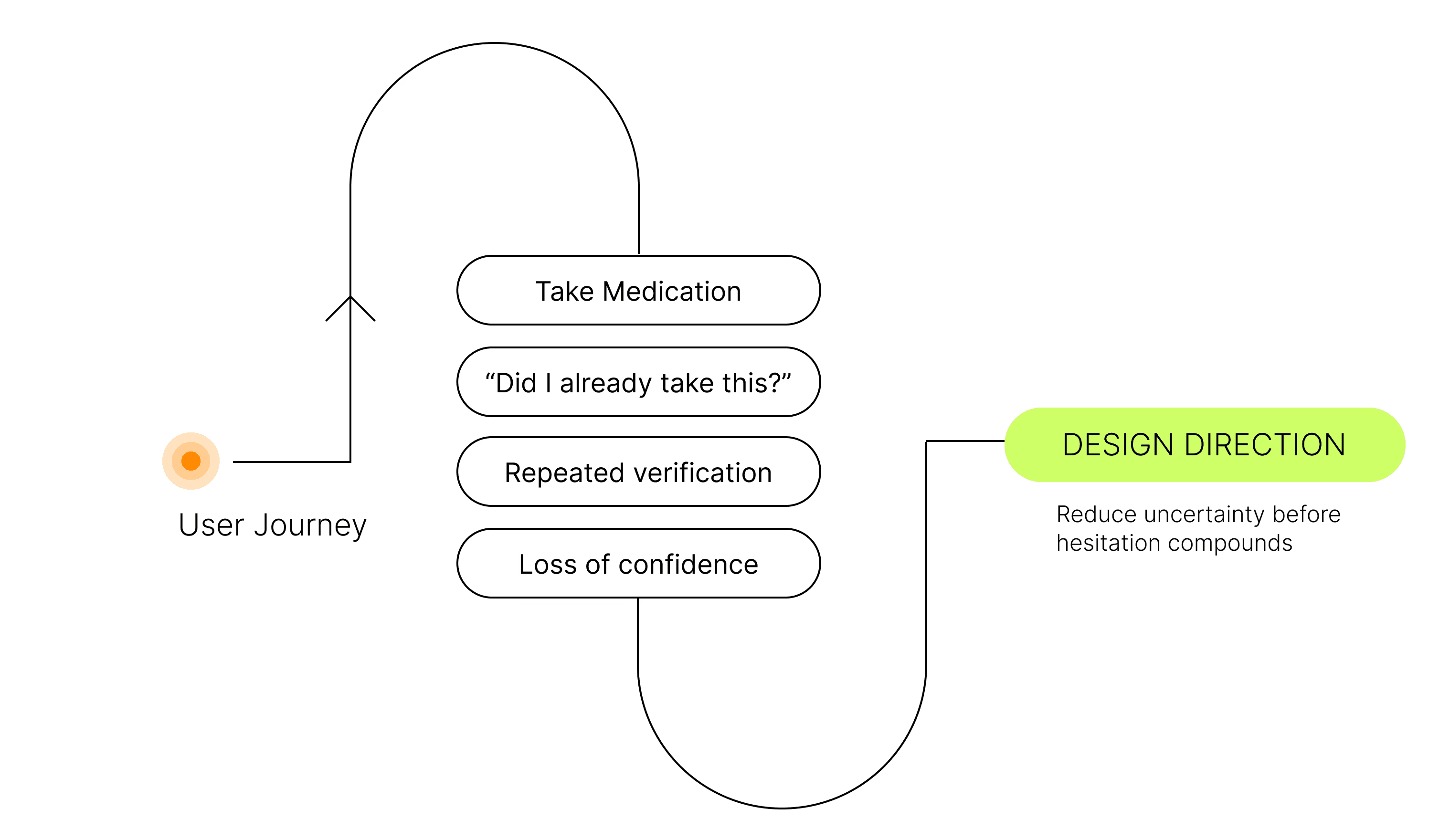
Hesitation compounds when routines lack clear confirmation.
Existing system priorities
Existing systems optimize for reminders and storage, but rarely address confidence after an action has occurred.
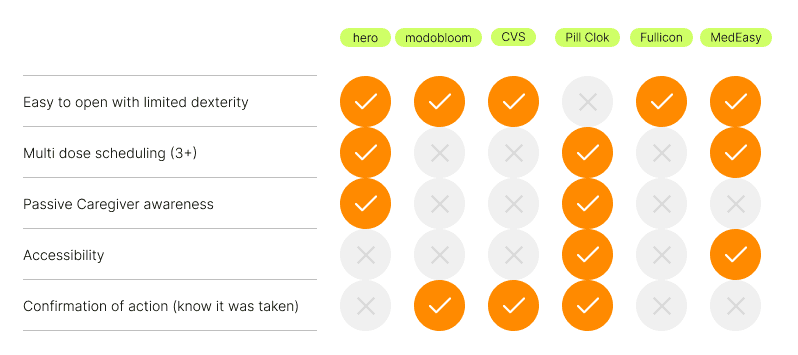
designing reassurance.
design principles
Guidance was designed to reassure without creating dependence.
Interaction Philosophy
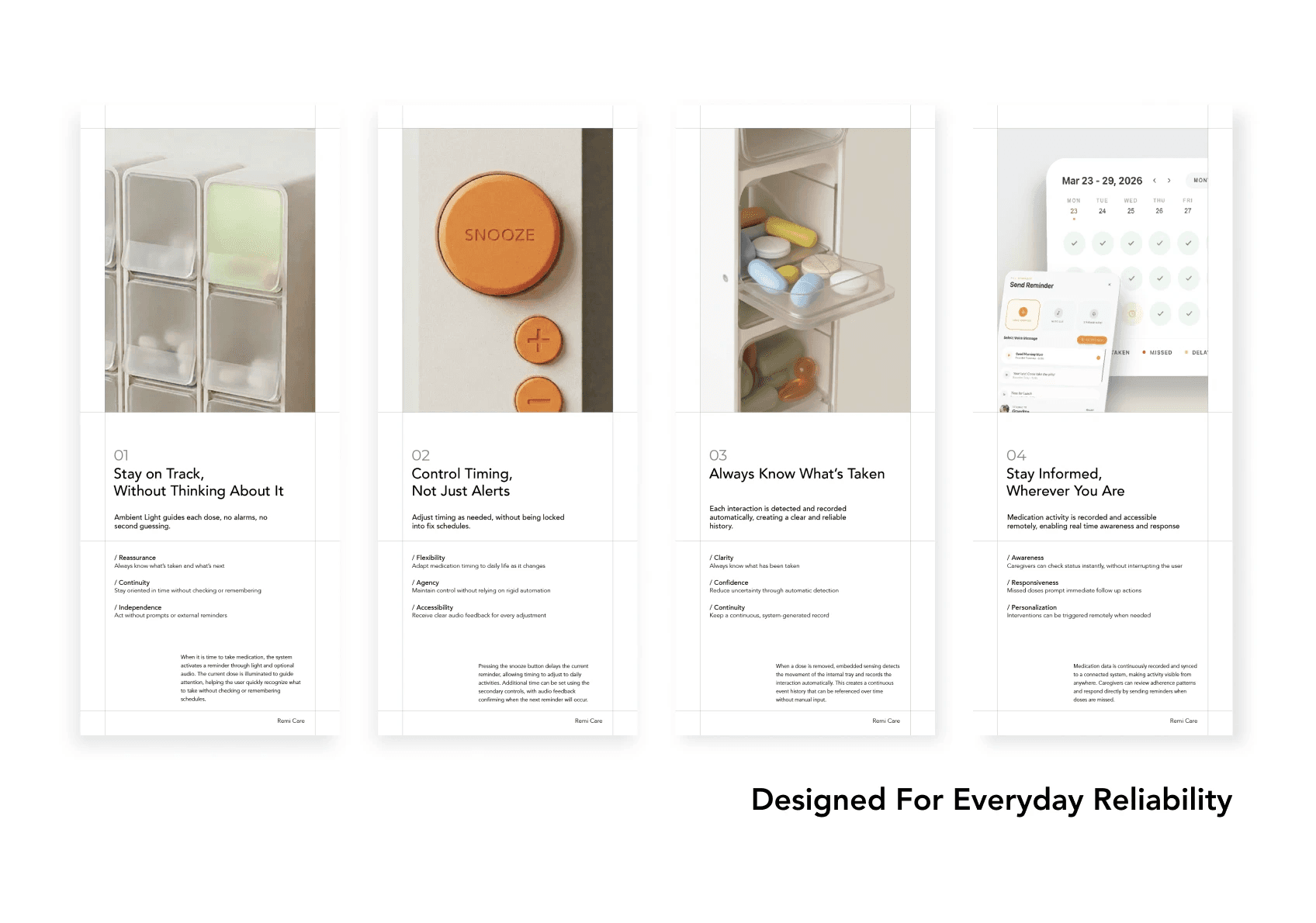
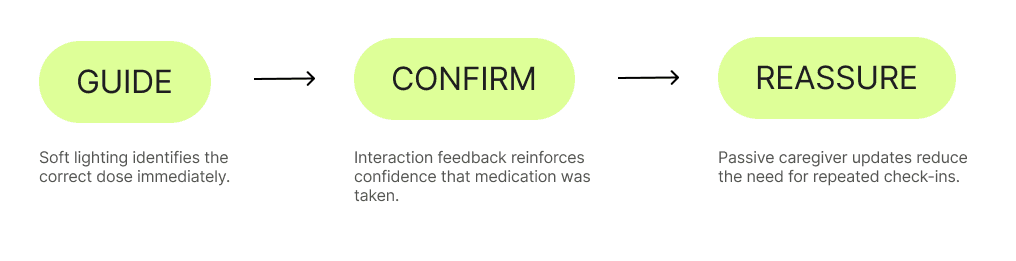
Rather than relying on repeated alarms, Remi Care reduces uncertainty through physical interaction, confirmation, and passive reassurance.
Ideation
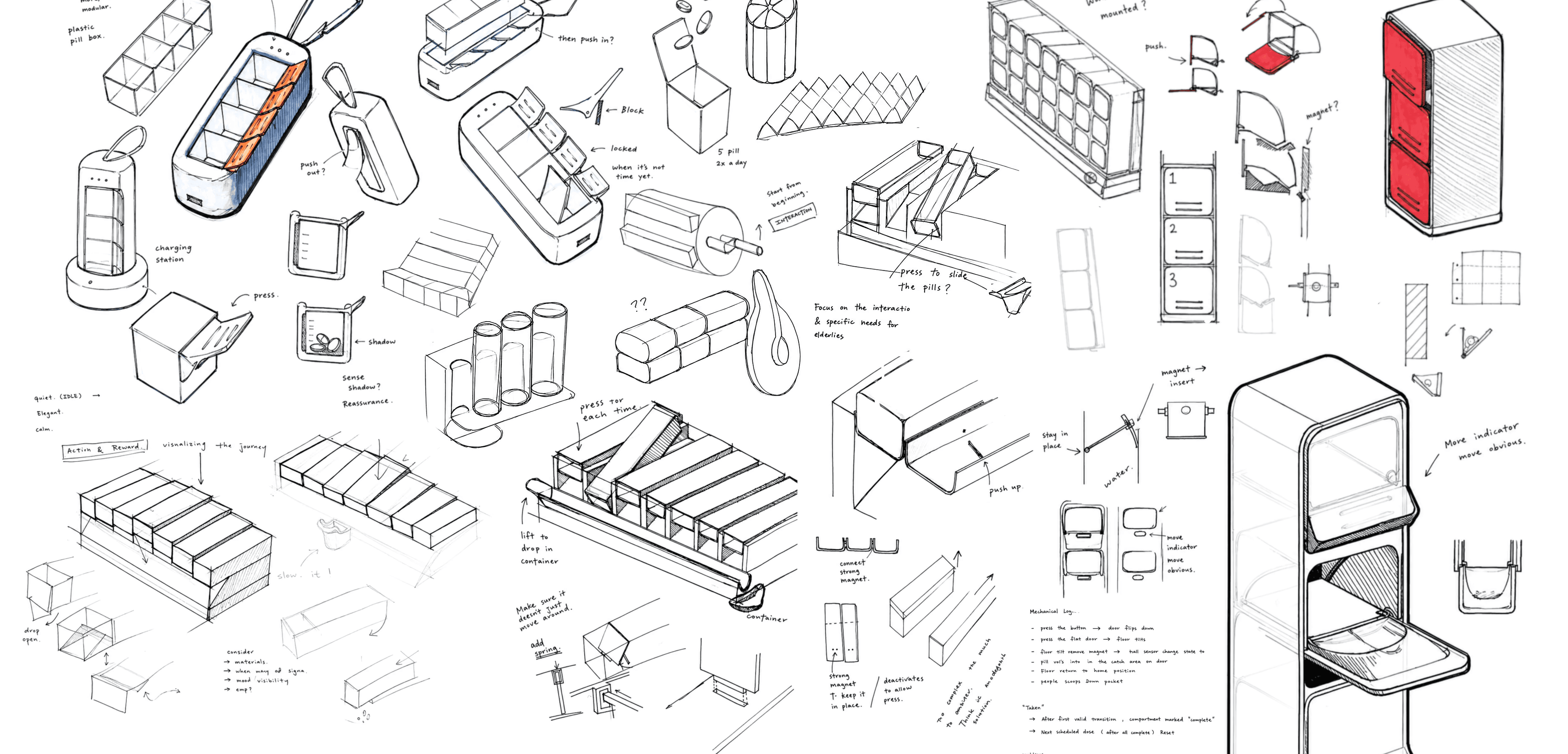
Early concepts explored how physical interaction, accessibility, and routine visibility could be integrated into a modular medication system.
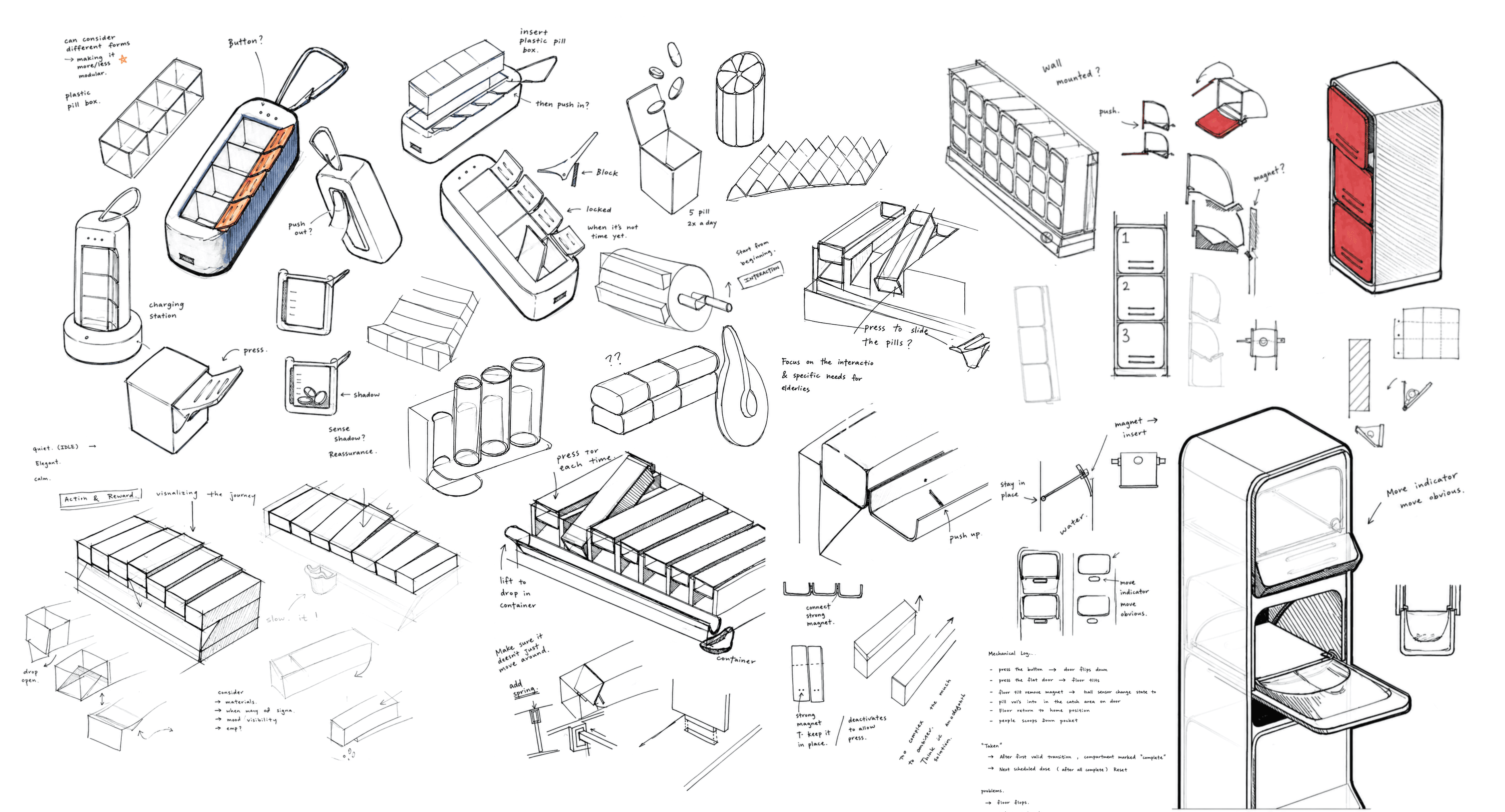
Physical Interaction Development
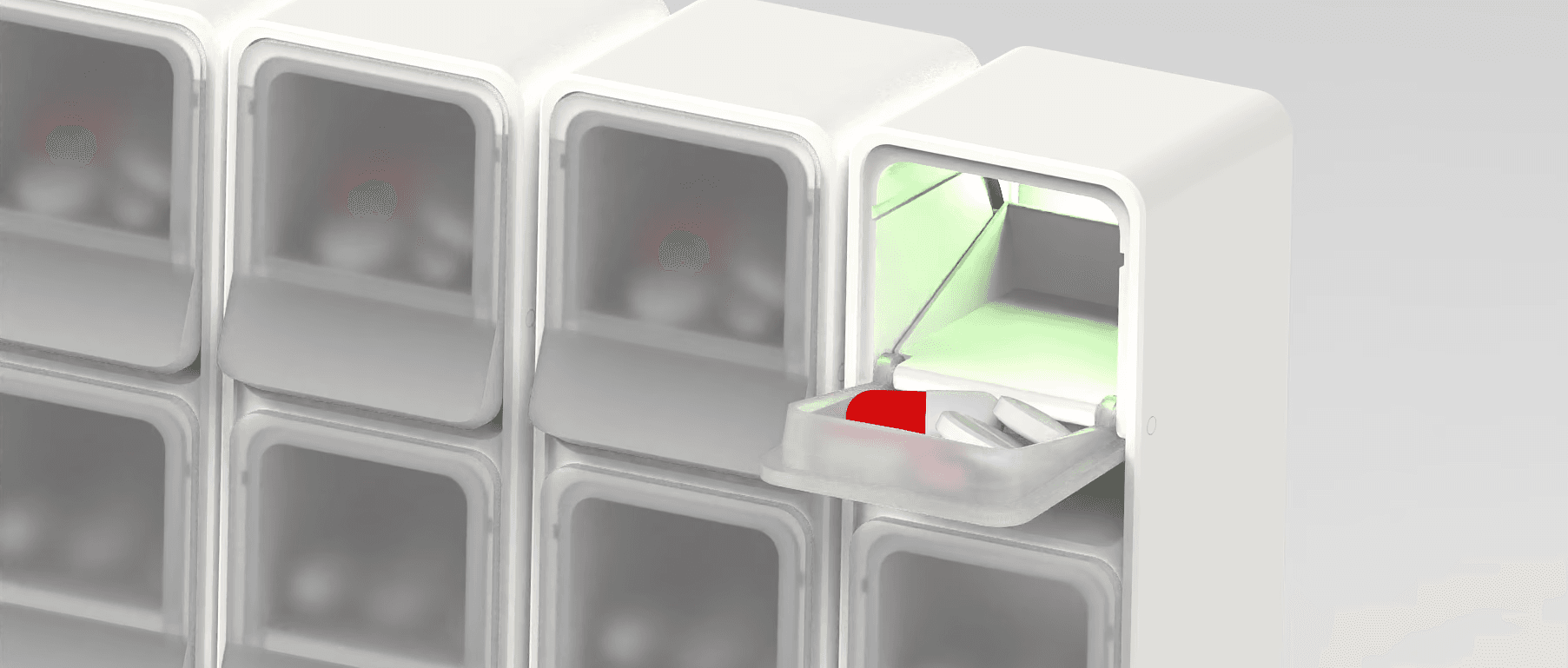
One gesture interaction
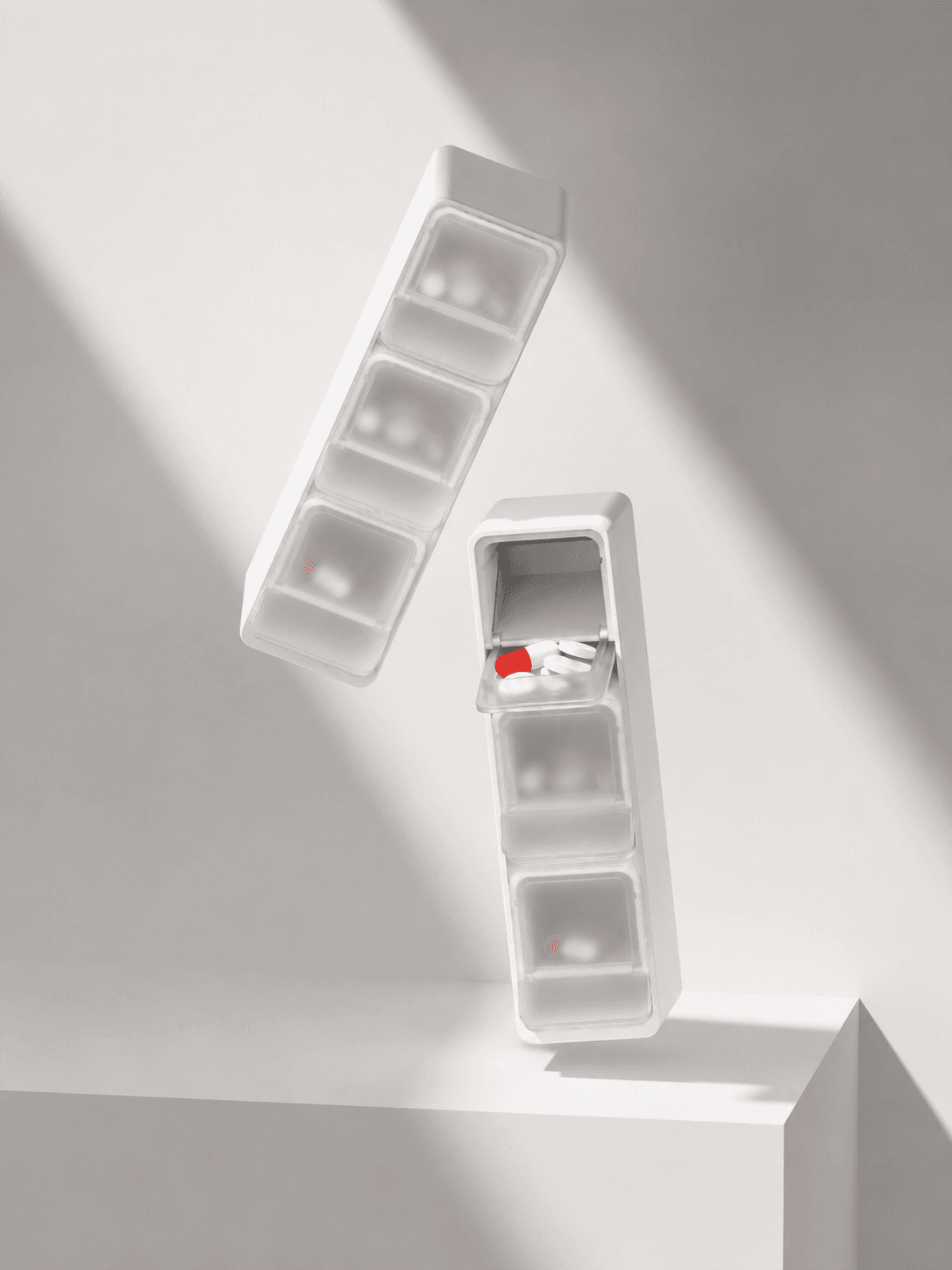
Compartments were designed to open through a single continuous motion.
Designed for limited dexterity
Grip resistance and opening force were refined through iterative testing.
Deliberate interaction feedback
Magnetic resistance reinforced intentional and recognizable actions.
Pill retrieval refinement
Interior geometry was adjusted to prevent pills from rolling during use.
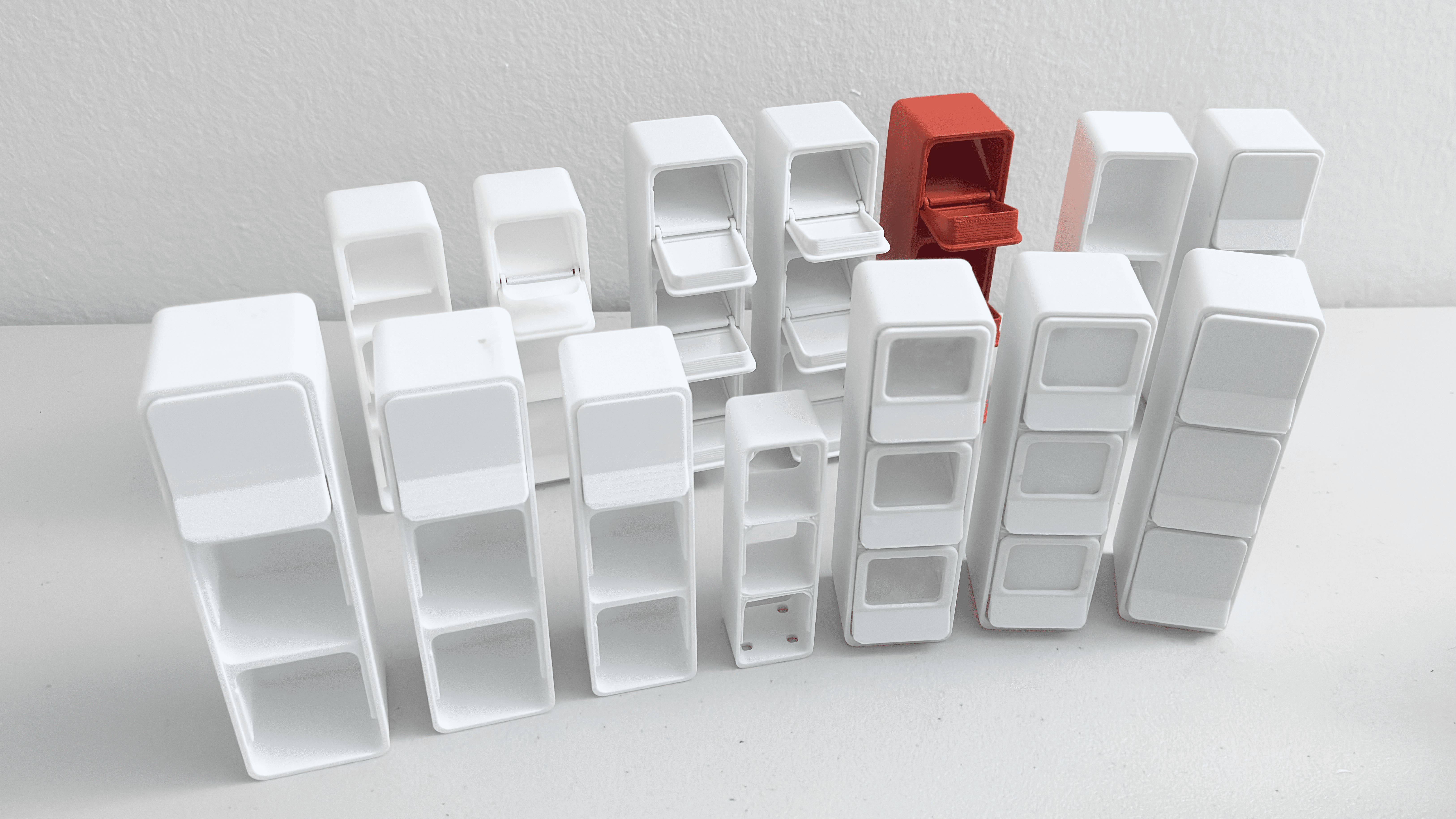
Iterative Prototyping
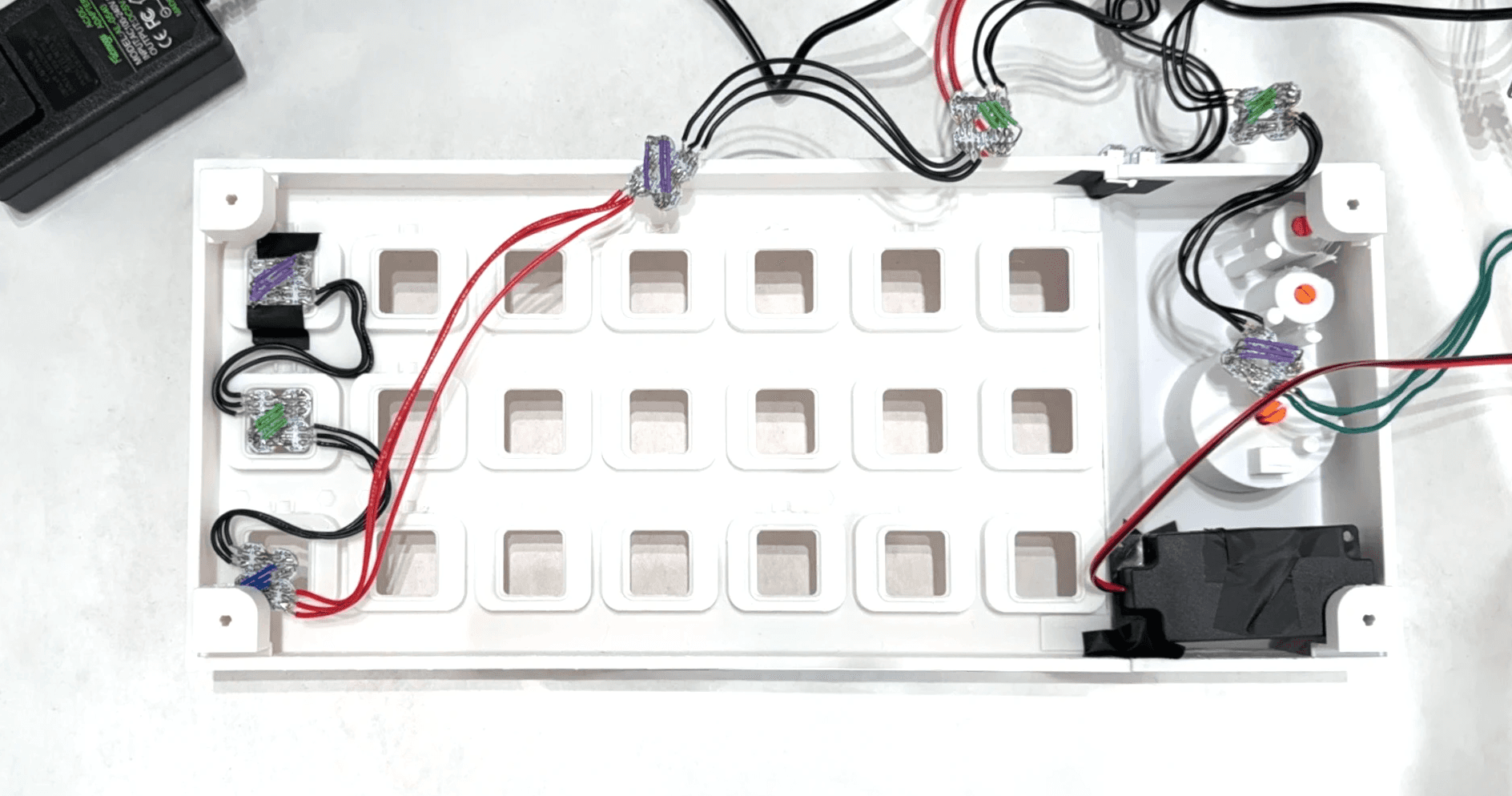
Prototypes were repeatedly tested to refine grip force, compartment motion, internal retention, and electronics integration.


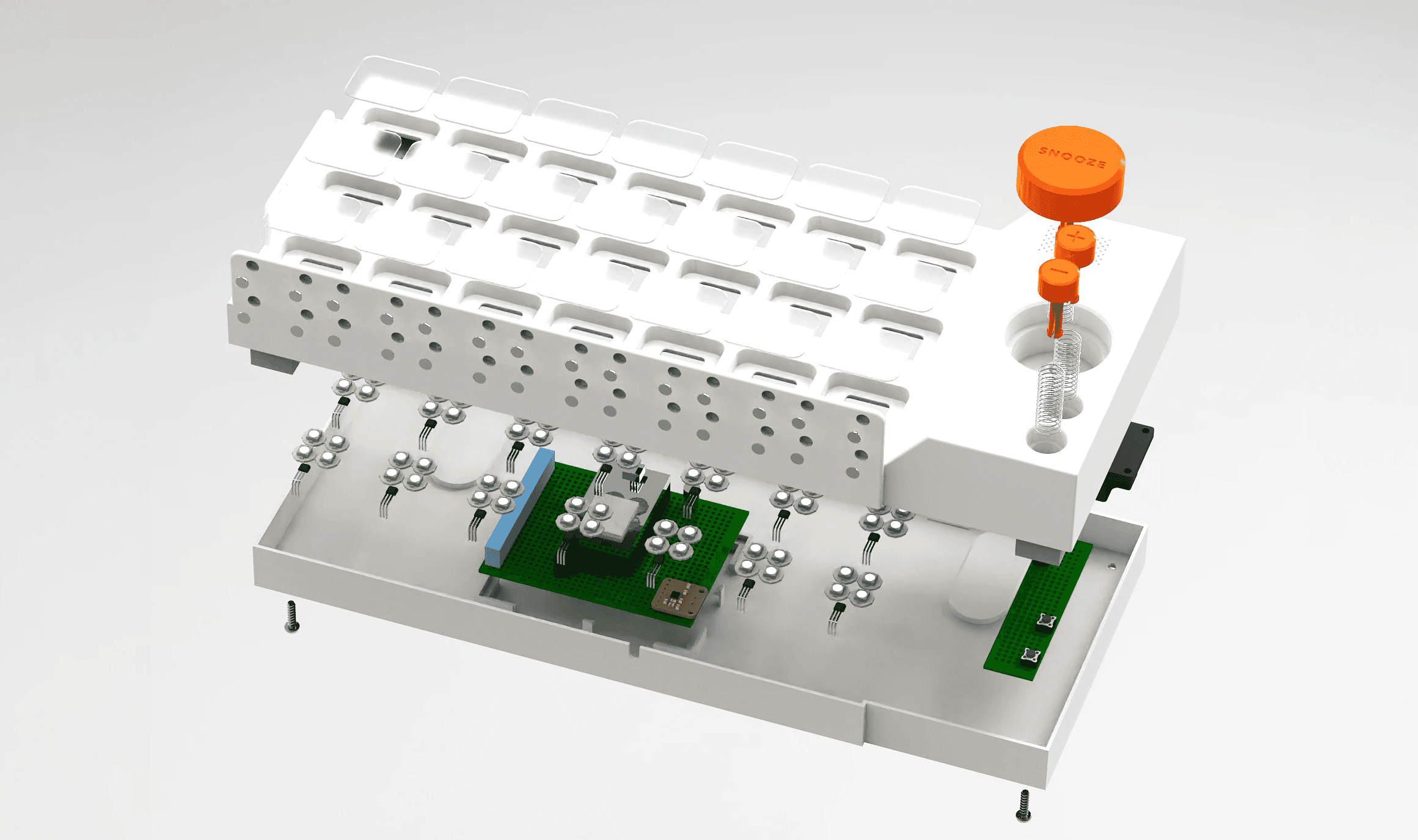
Embedded System Architecture
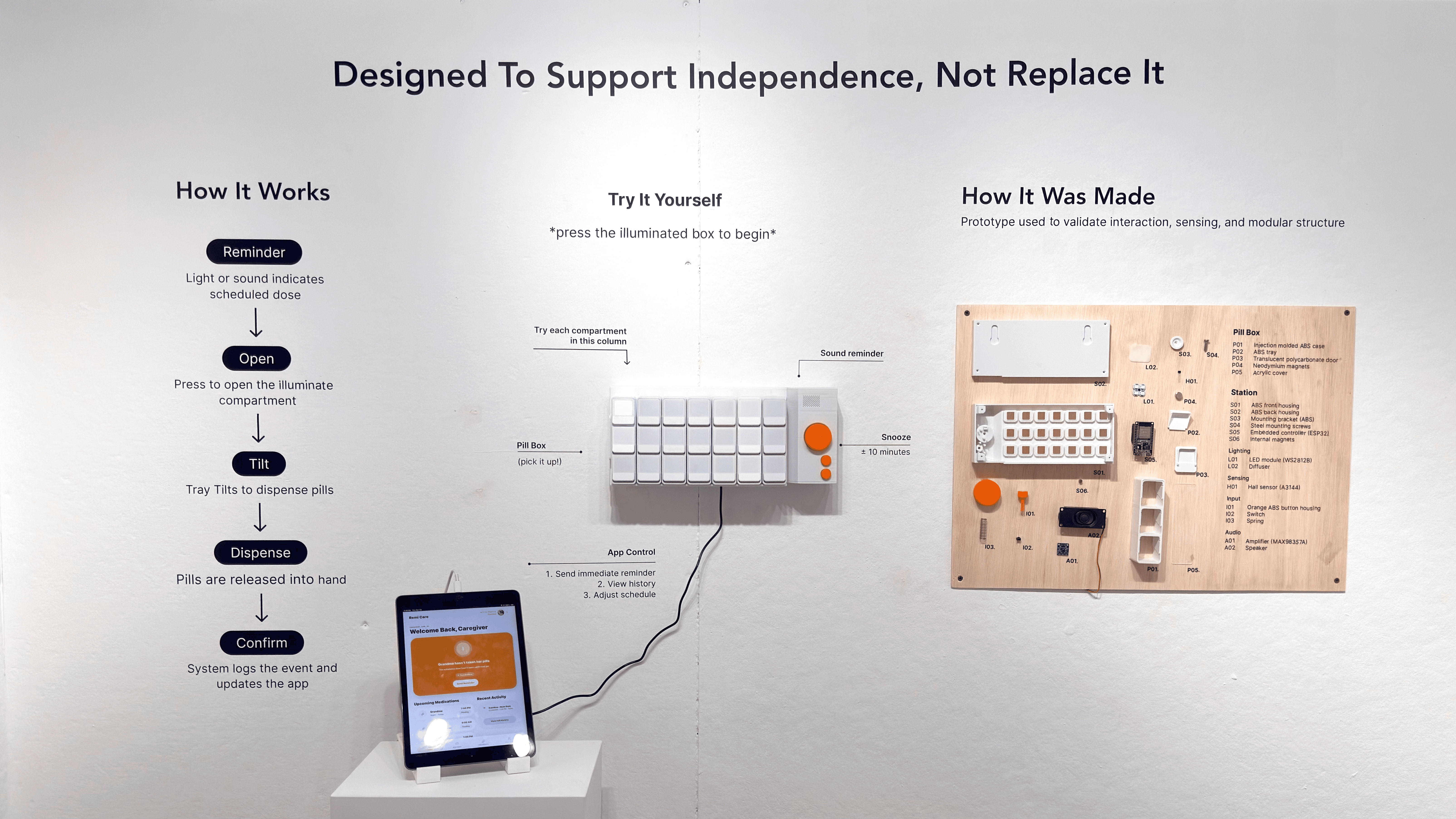
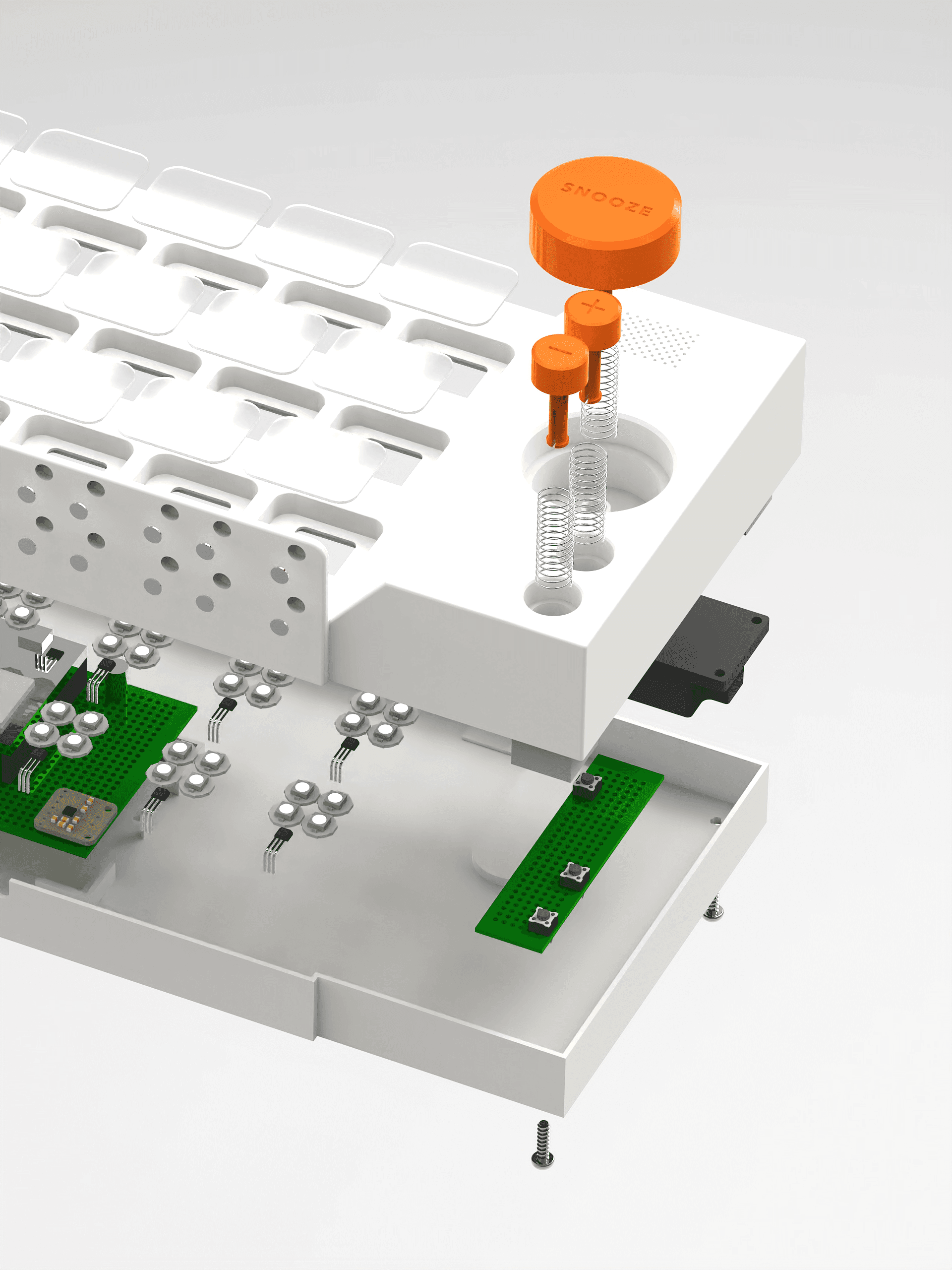
The internal architecture coordinates lighting, interaction sensing, audio feedback, and caregiver status updates within a modular system.
Interaction Demonstration
The working prototype demonstrates real time medication guidance through lighting, interaction sensing, audio feedback, and caregiver status updates.
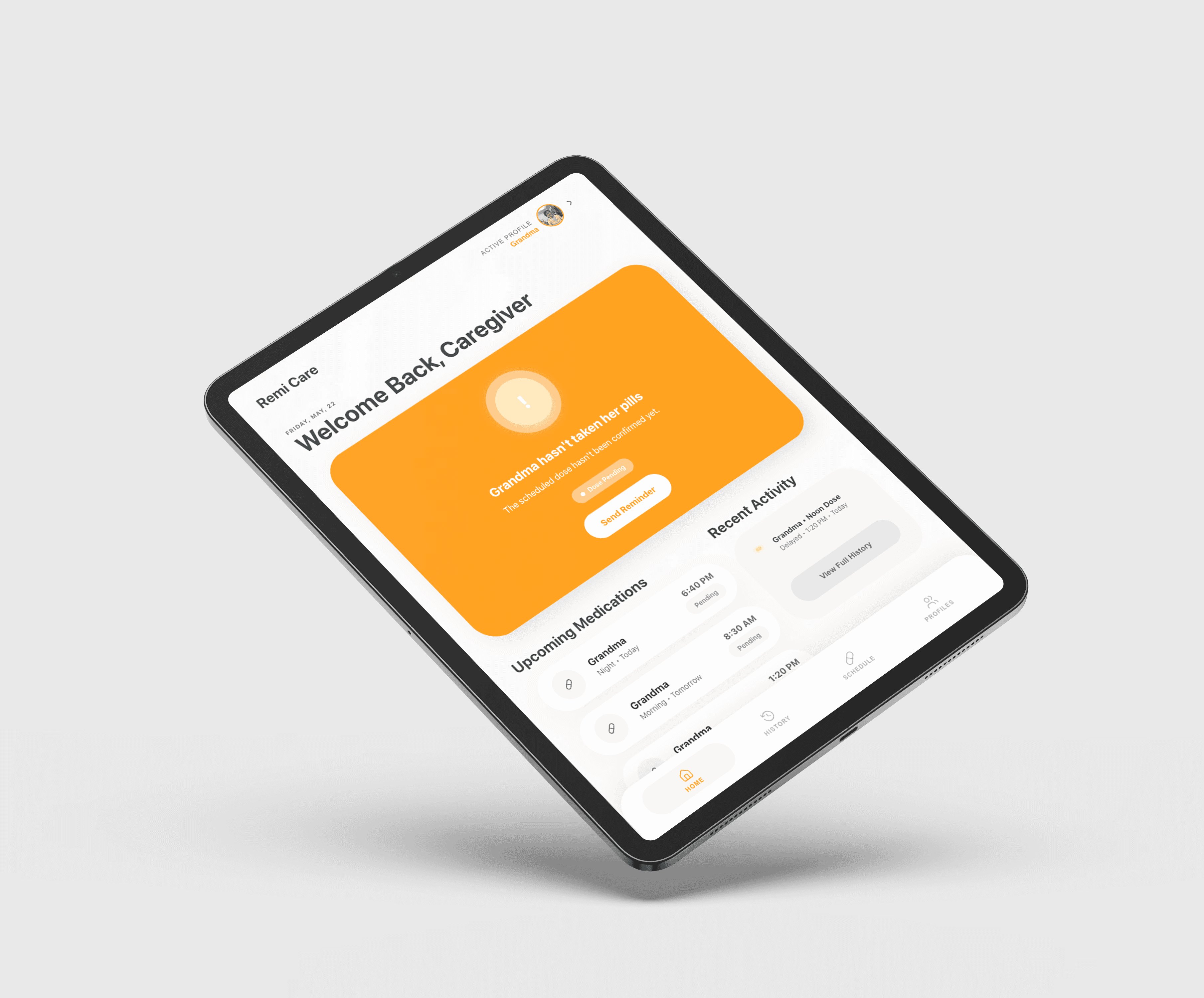
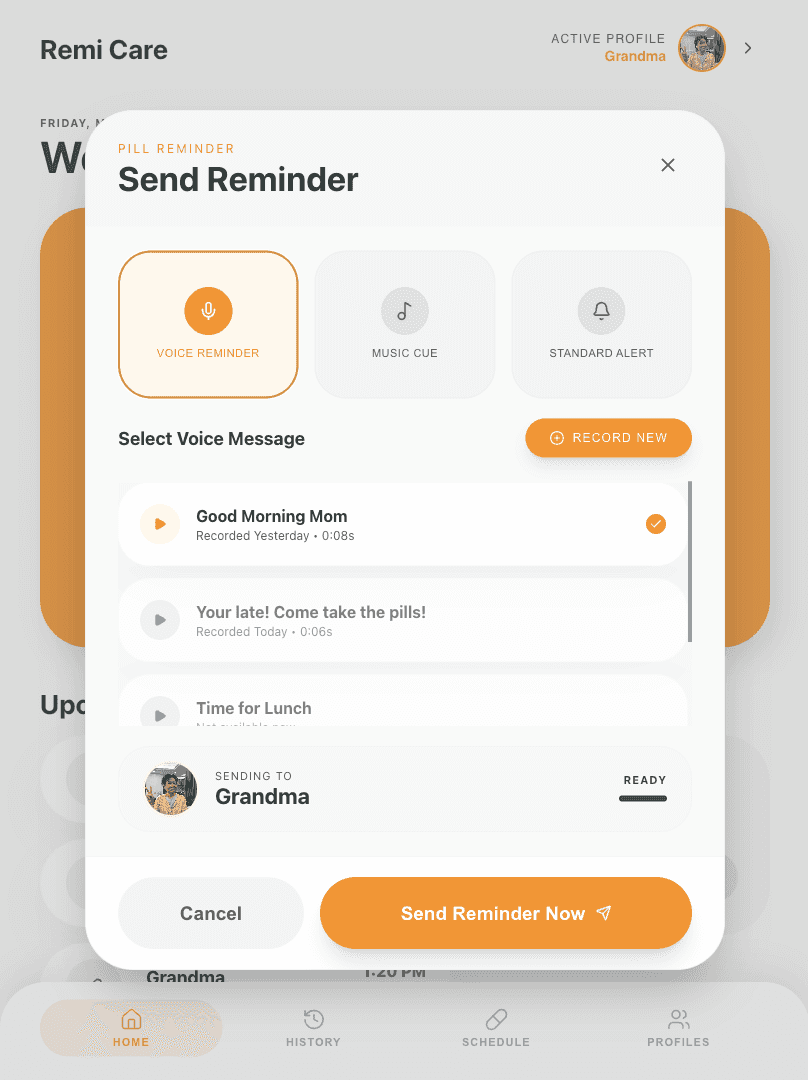
Immediate Reminder
When routines break down, caregivers can intervene remotely without requiring constant supervision.
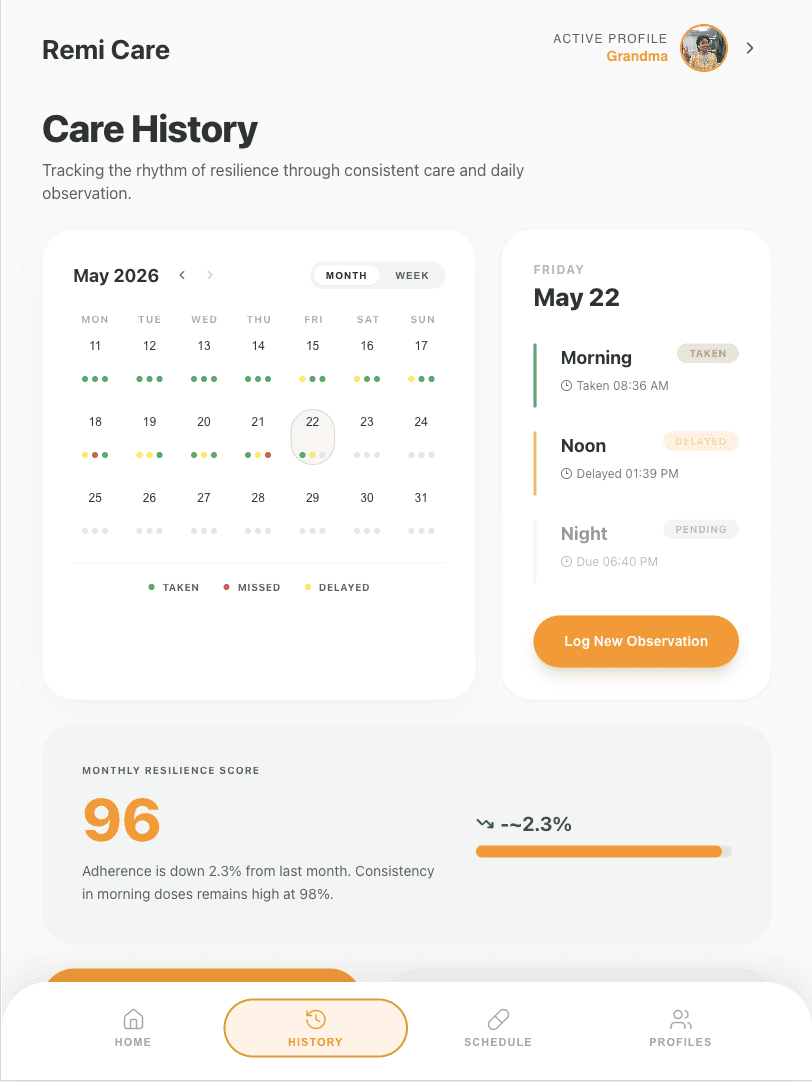
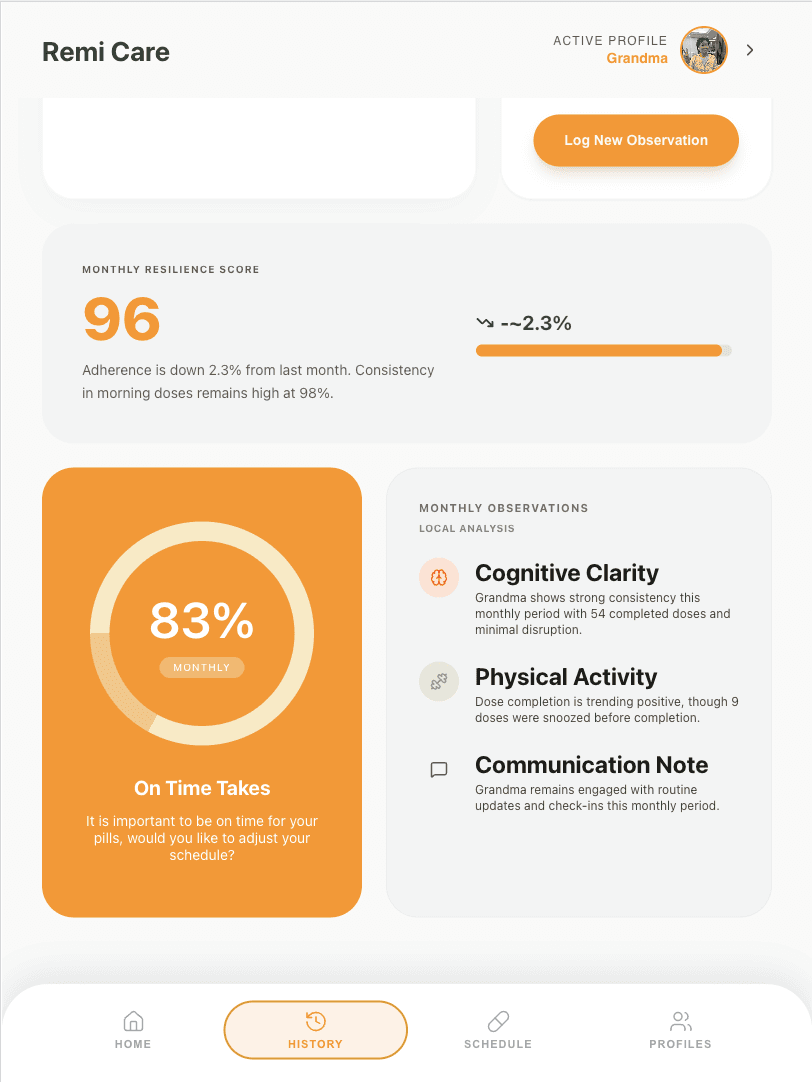
Routine Tracking
Passive interaction logs help caregivers stay informed without repeated check-ins.
Adaptive Scheduling
Medication timing can be adjusted remotely to support real life routines rather than rigid schedules.


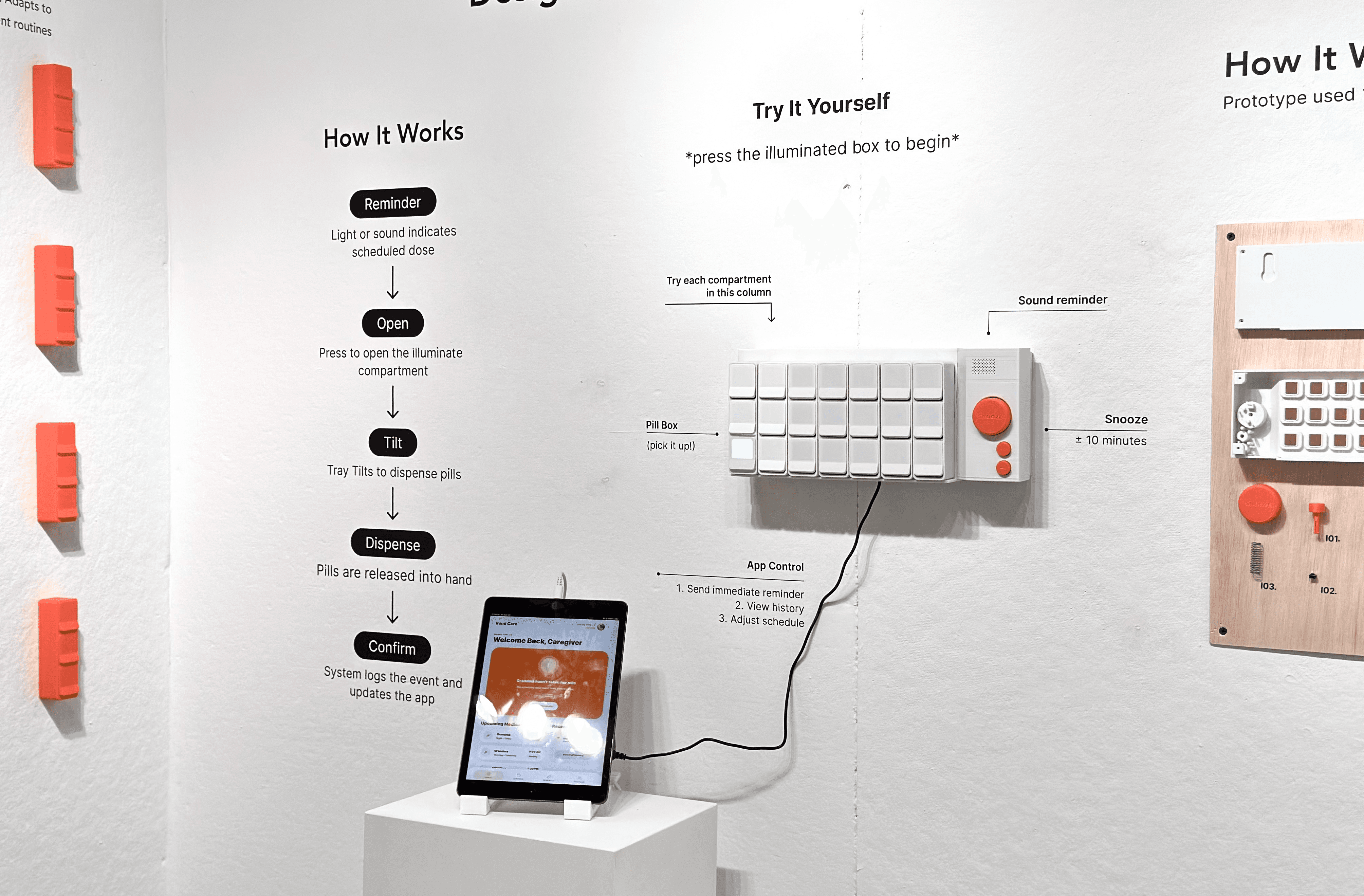
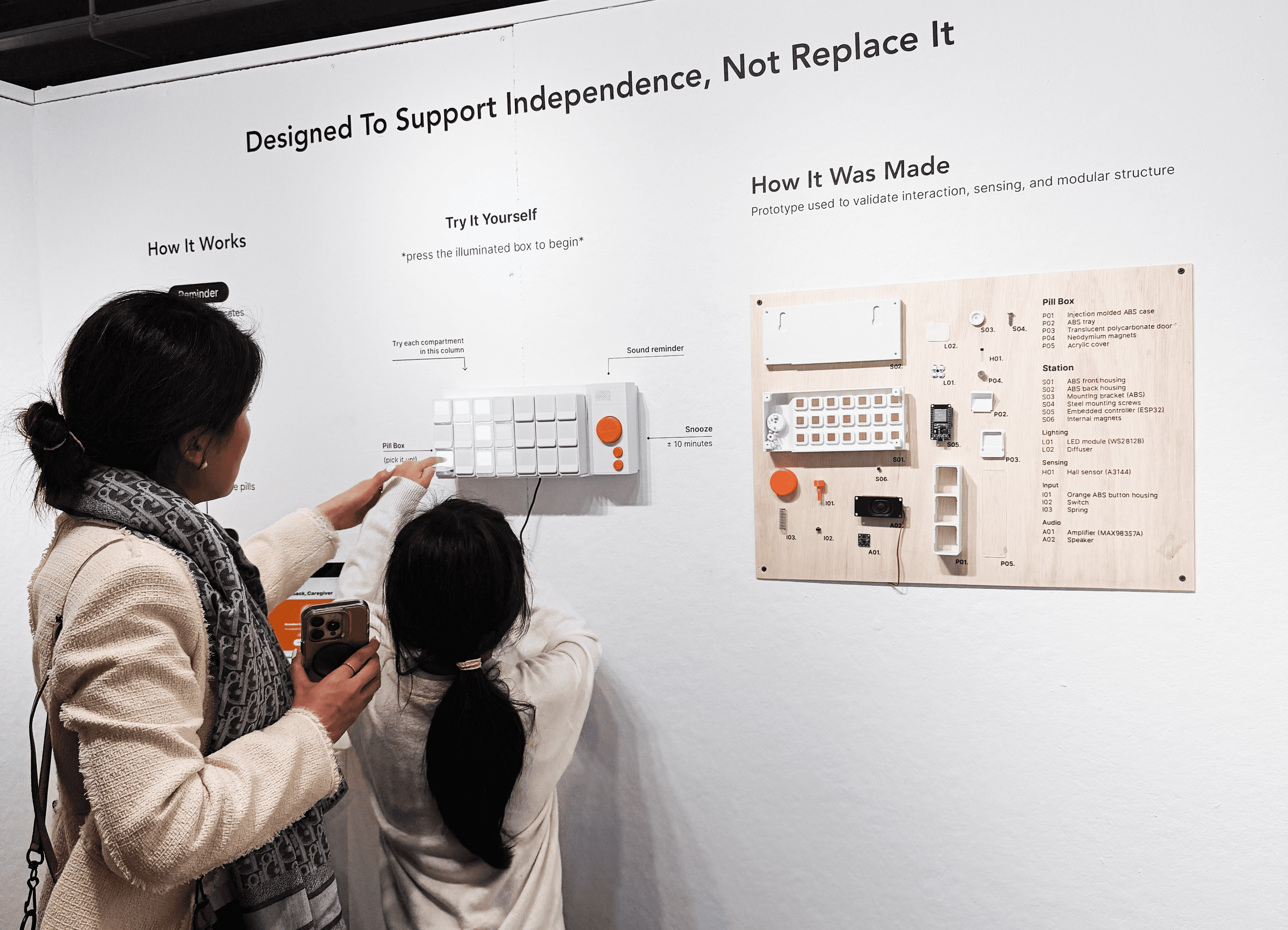
Interactive demonstration
Visitors were able to intuitively understand lighting guidance, compartment interaction, and caregiver feedback flows without instruction.
real life feedback
Exhibition interactions revealed how users naturally interpreted lighting cues, physical feedback, and medication routines without verbal guidance.