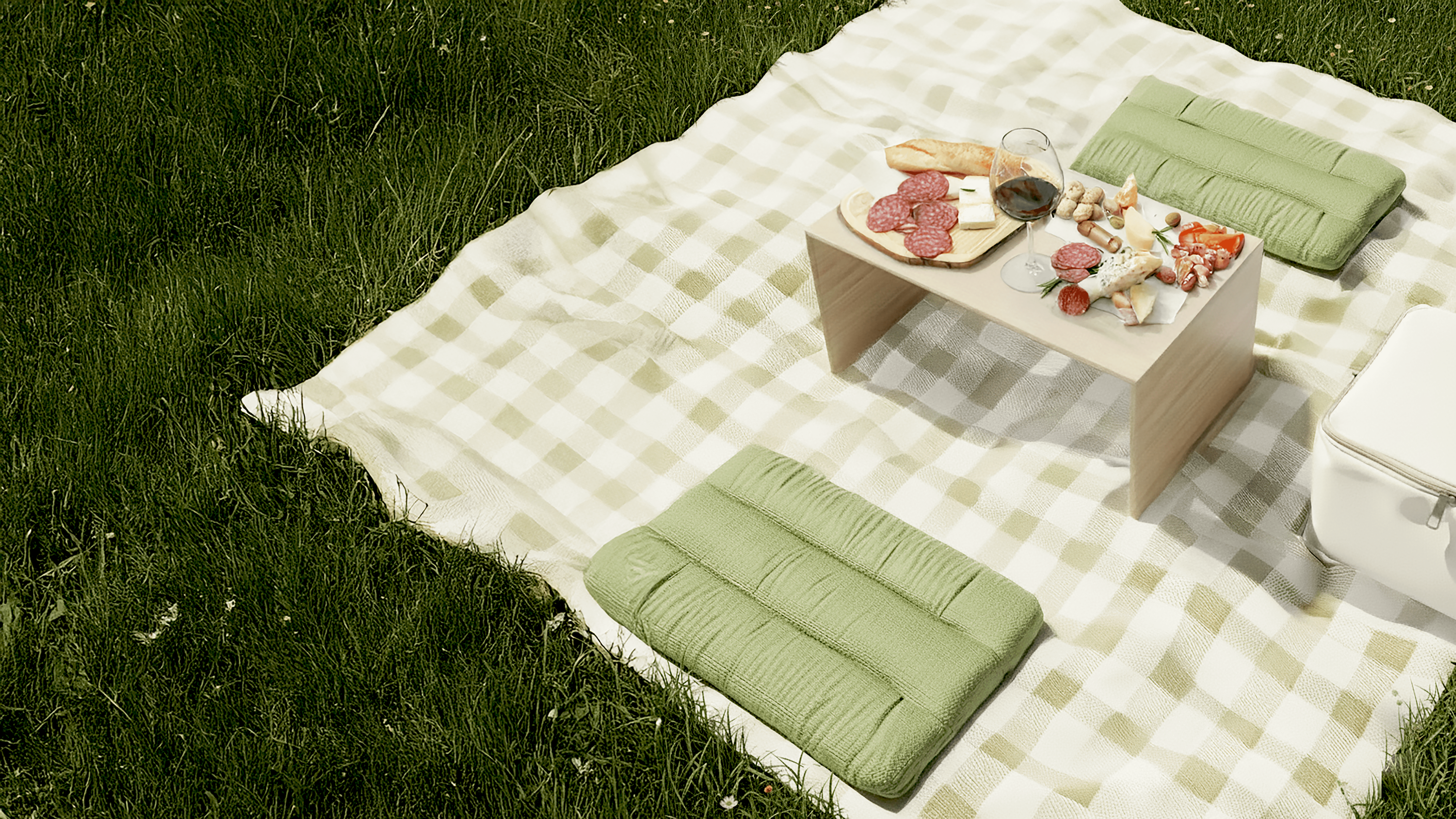
flip! for two
A transformable outdoor dining system for two
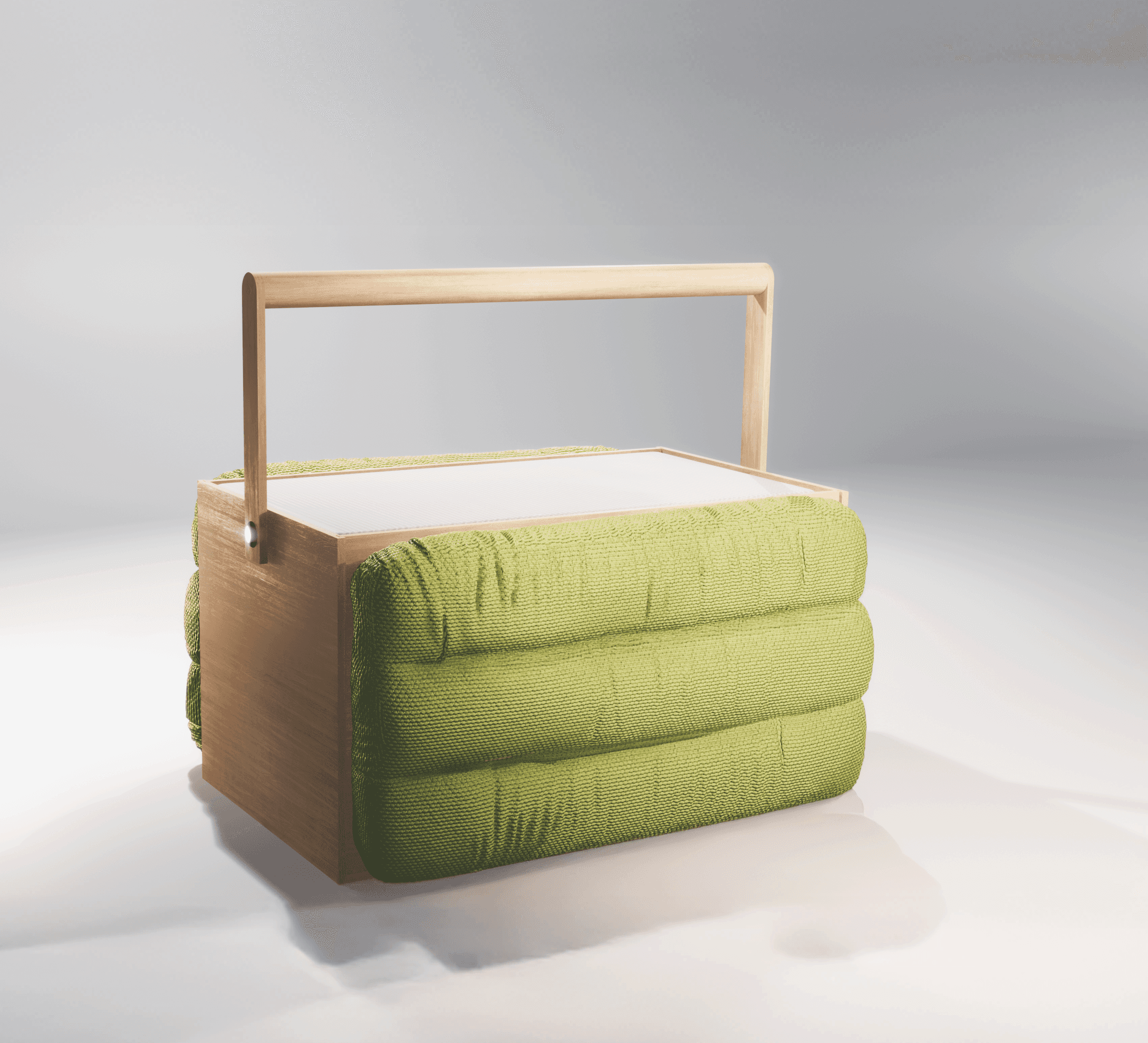
Flip is a compact wooden table and integrated cushion system that transforms from a carryable storage unit into a stable outdoor dining surface.
Designed for shared meals outdoors, it integrates seating, surface, and storage into a single modular system that replaces disposable picnic setups with a durable, reusable alternative.
CATEGORY:
YEAR:
2025
EXPERIENCE:
Industrial Design / Product Strategy / System Architecture / User Research / Prototyping / Business Modeling
opportunity.

Elevated experience outdoors
Outdoor meals are often romanticized, yet the reality involves carrying multiple items, unstable surfaces, and improvised setups. Most portable options prioritize storage, not the shared dining experience.
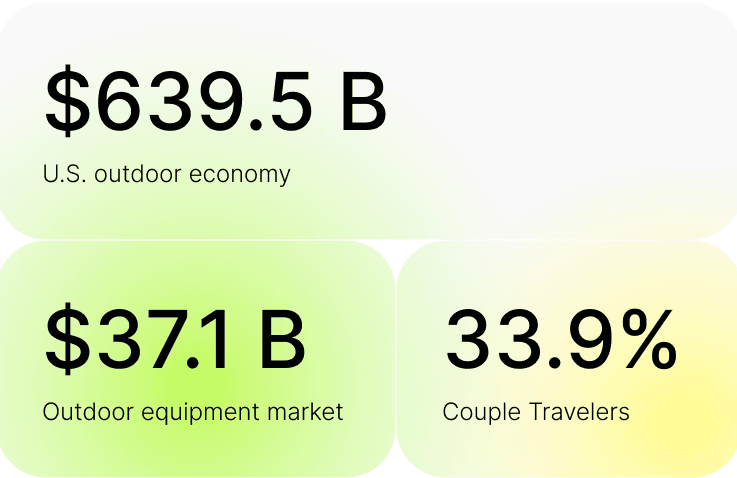
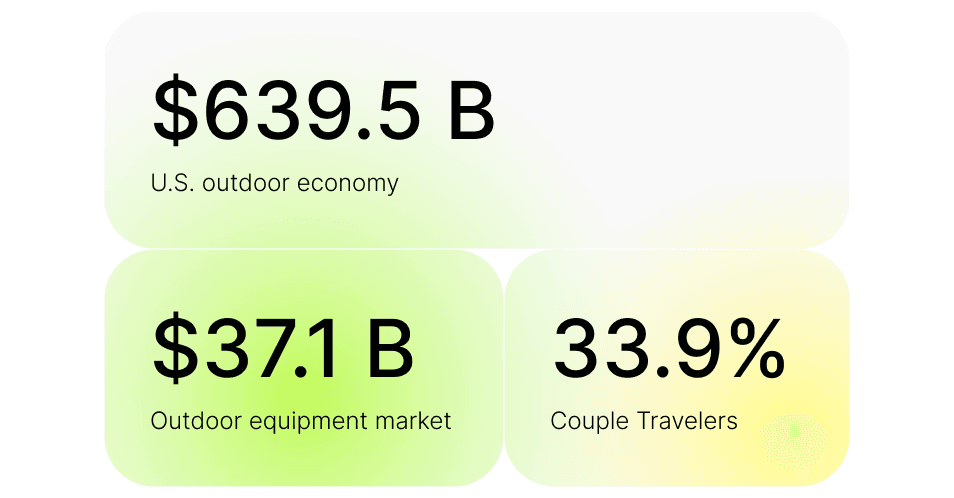
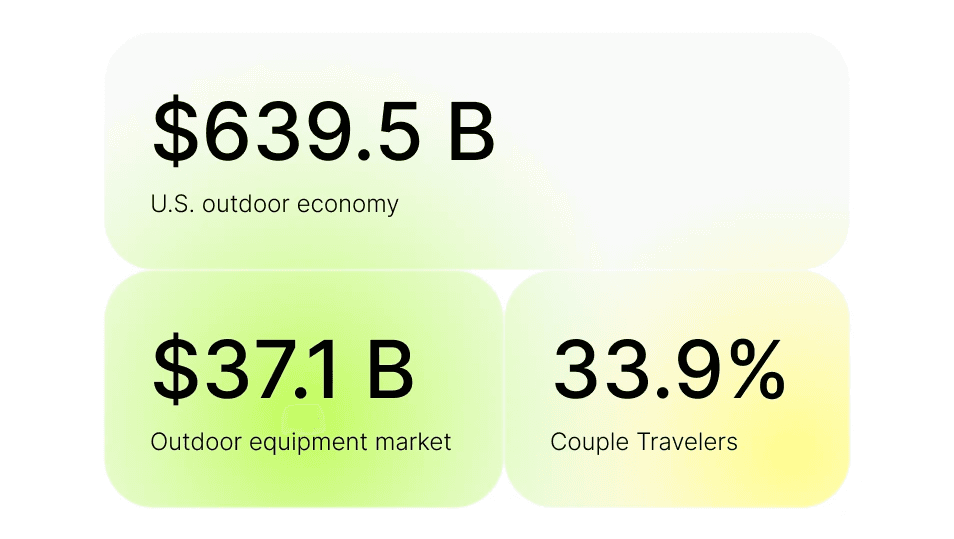
MARKET CONTEXT
As outdoor recreation expands, expectations for thoughtfully designed shared experiences are rising.
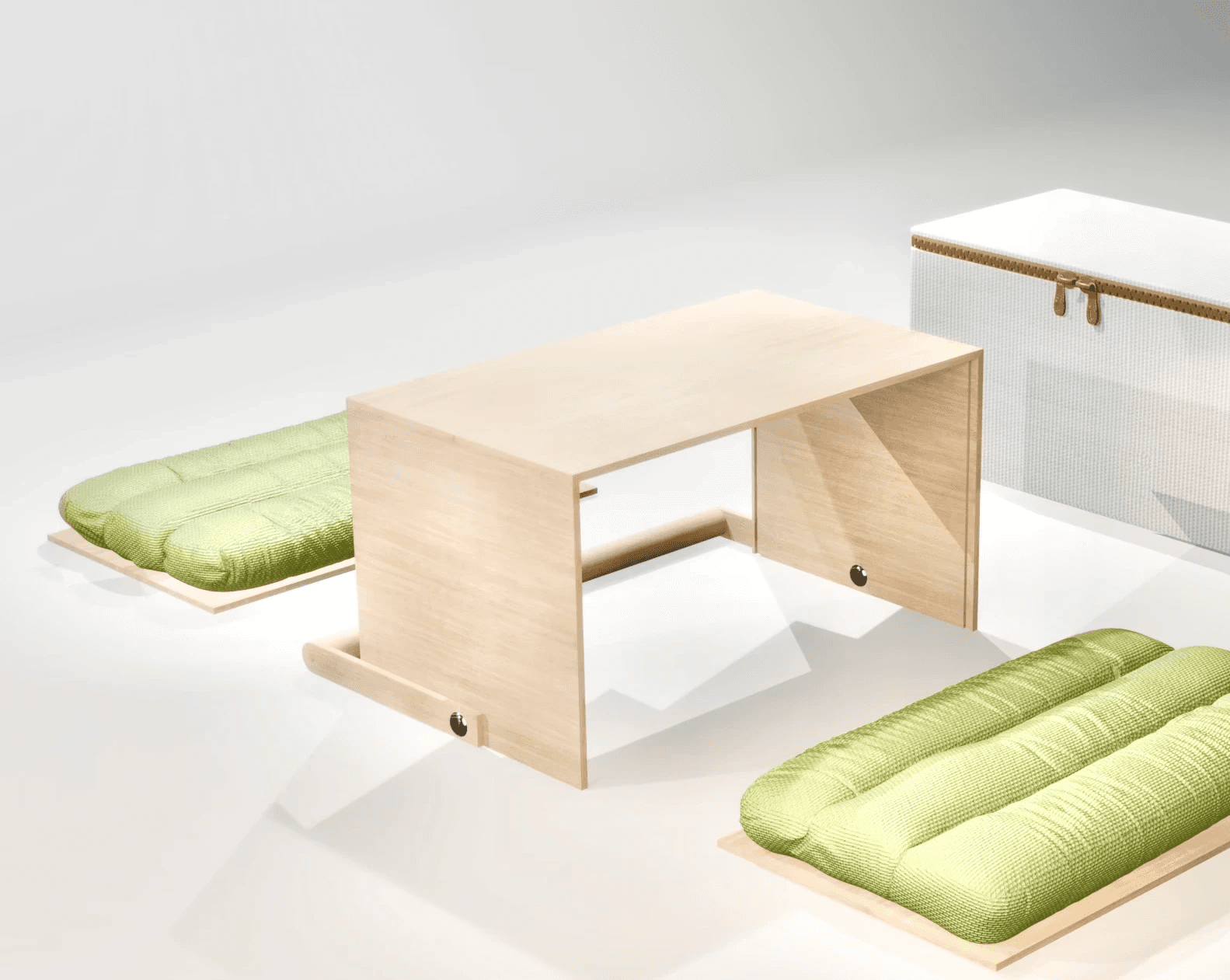
Dining Mode
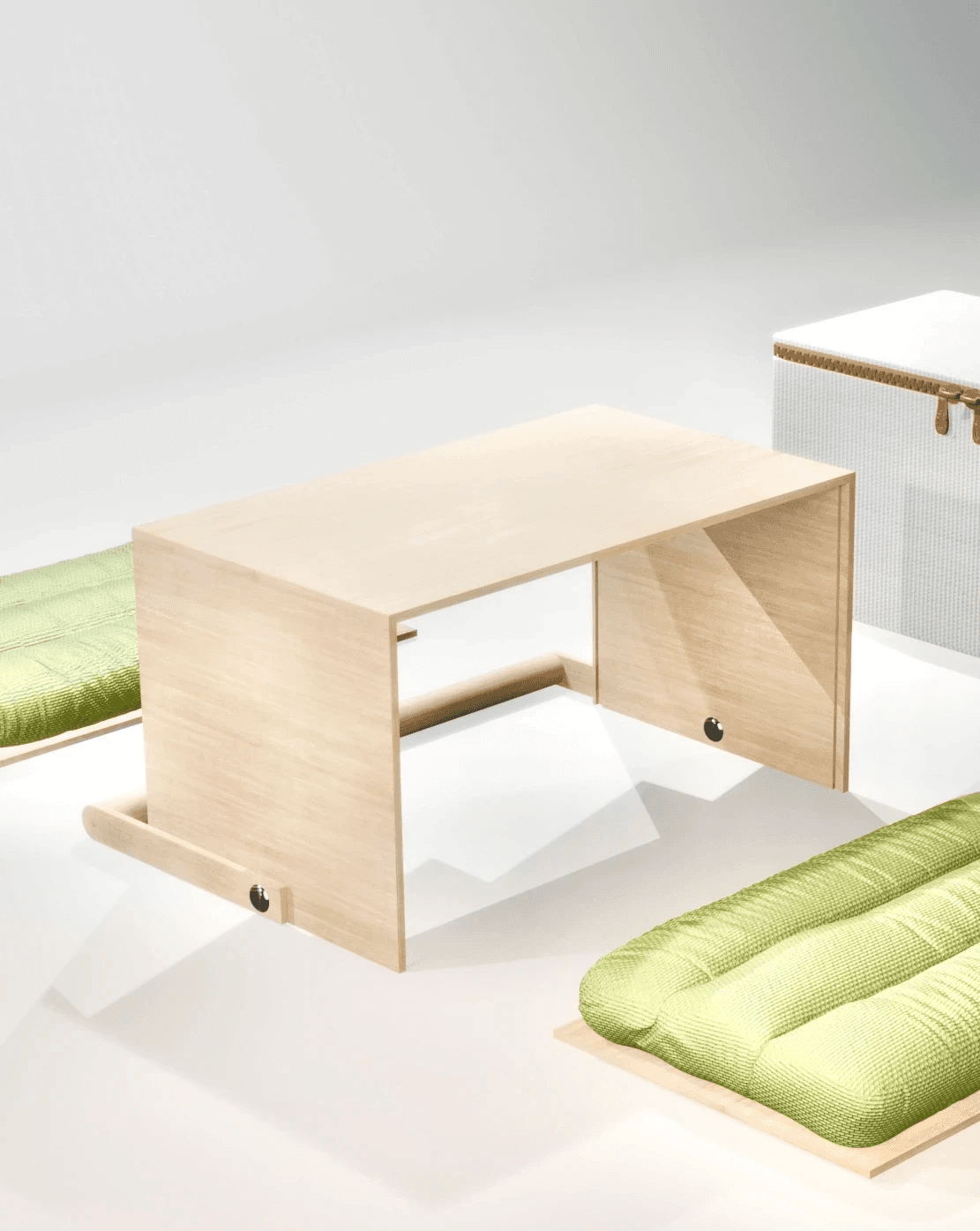
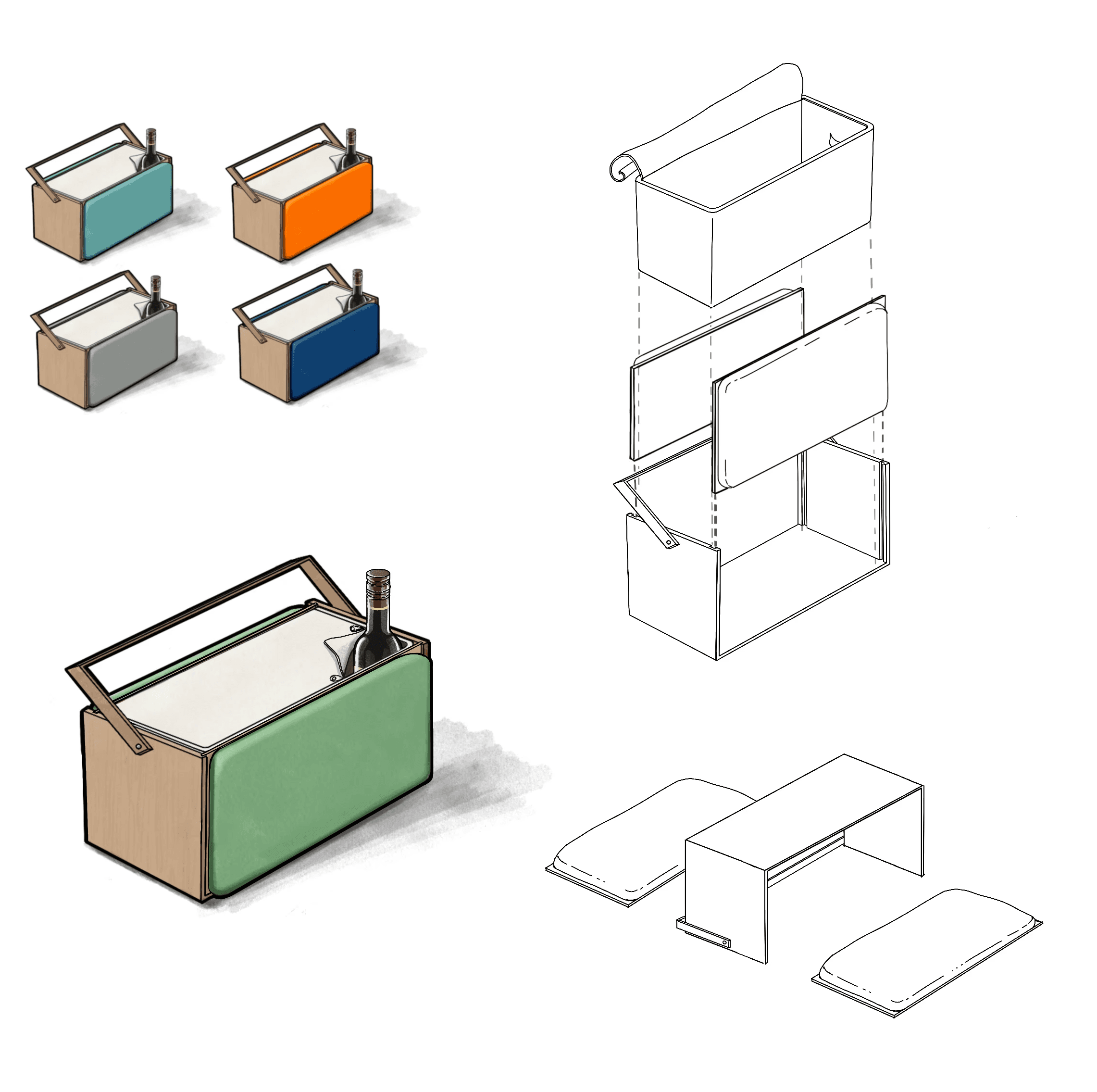
Flip transforms into a stable U-shaped wooden table designed for two people to share a meal comfortably on uneven outdoor surfaces.
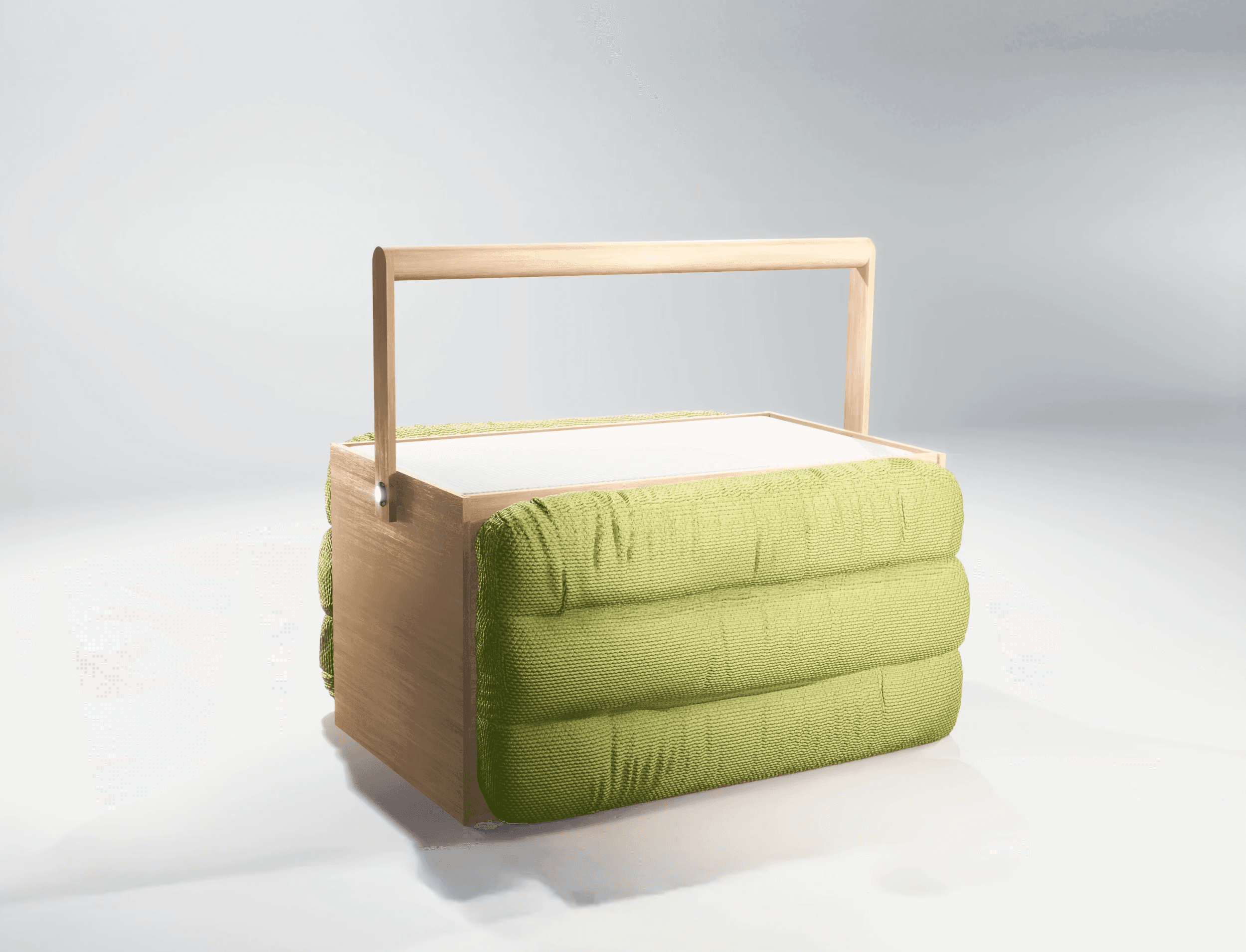
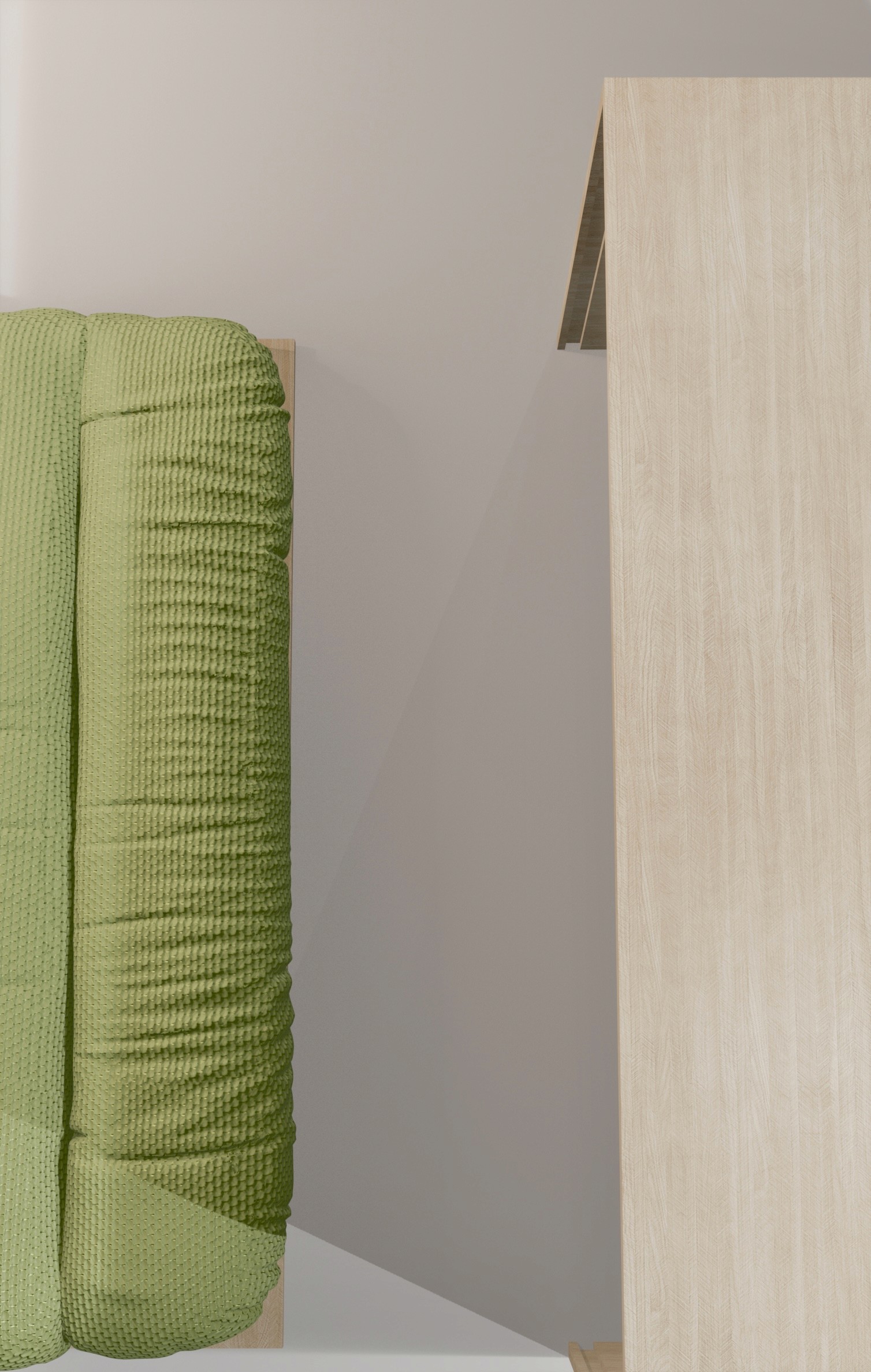
CARRY MODE
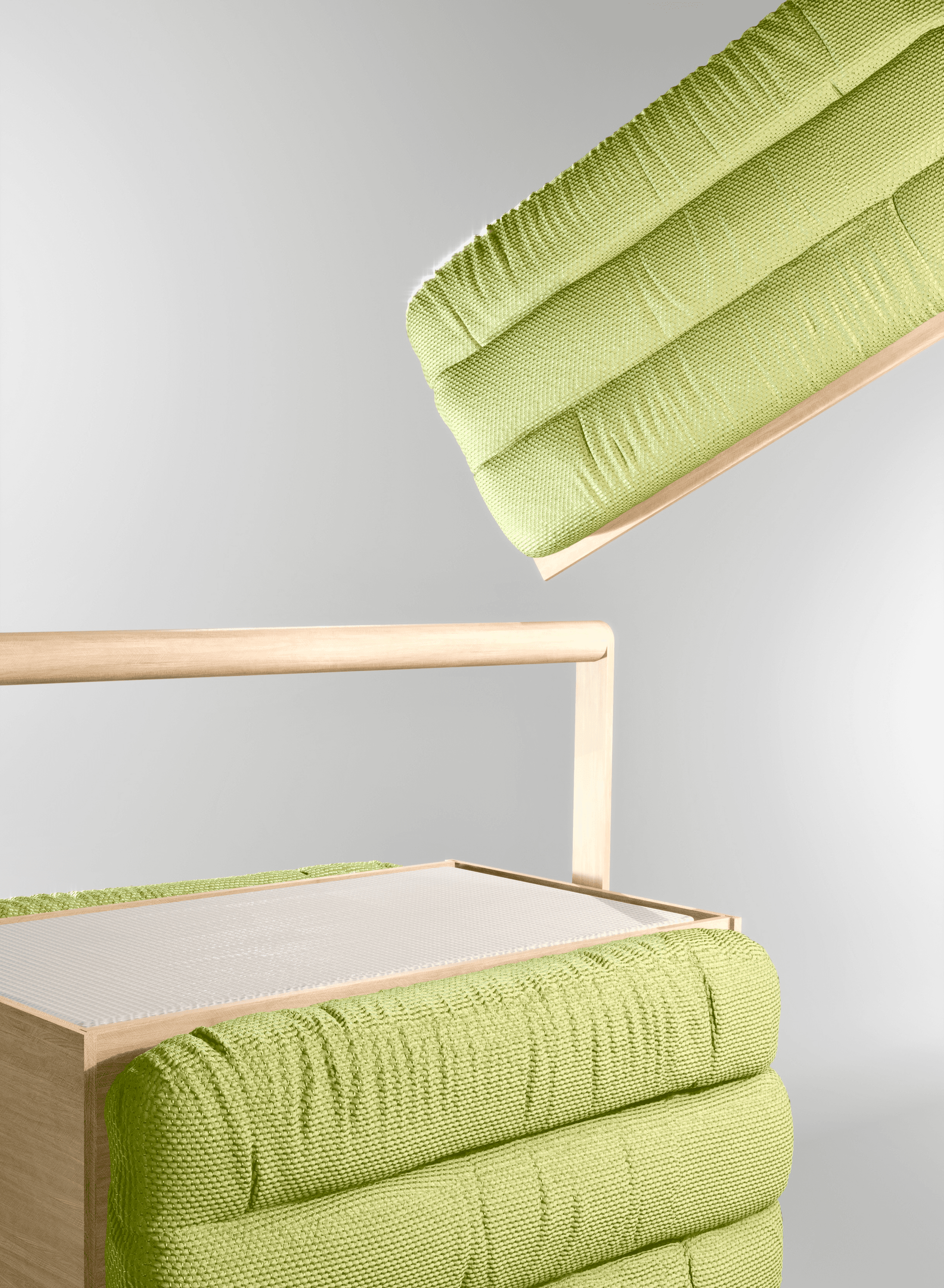
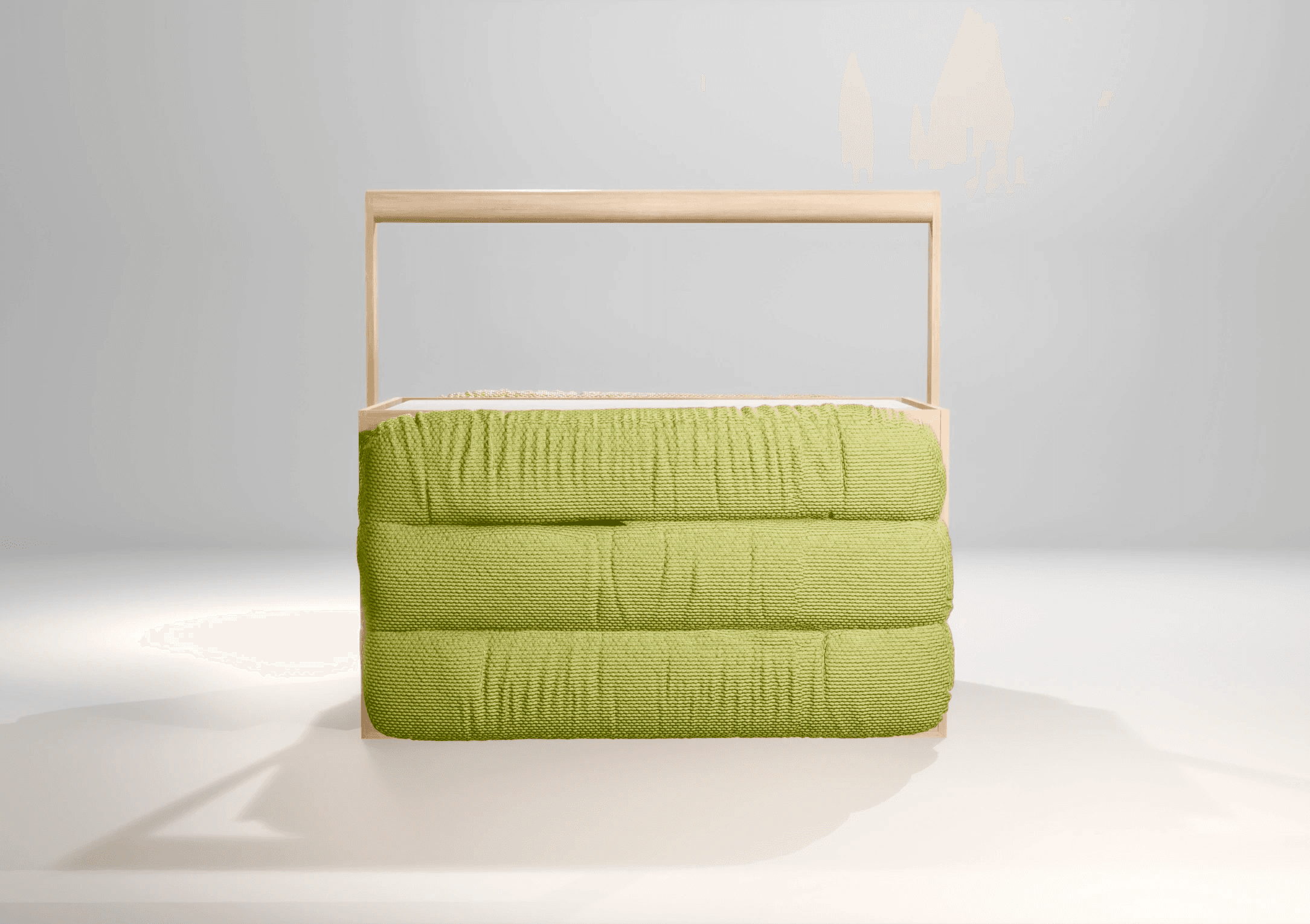
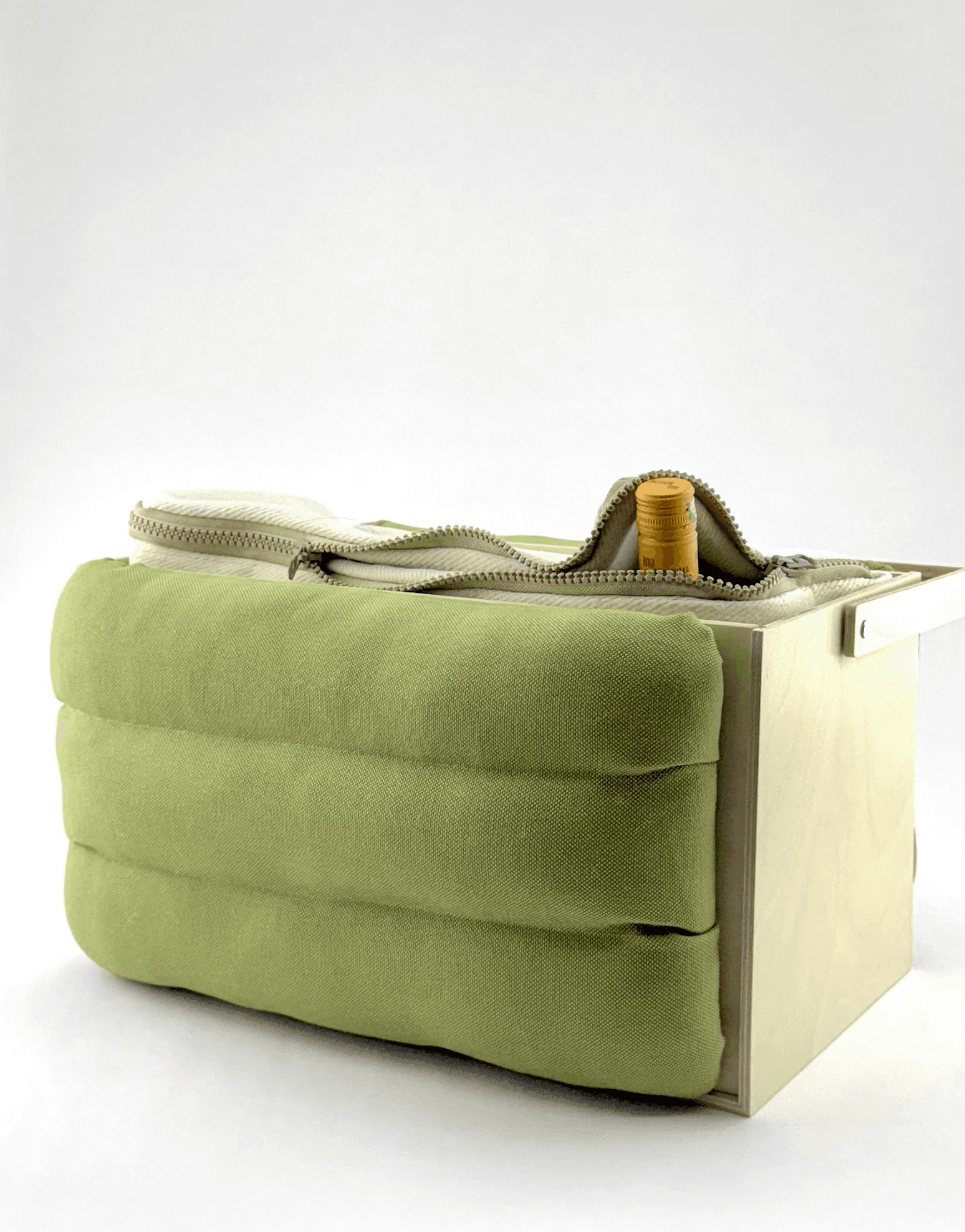
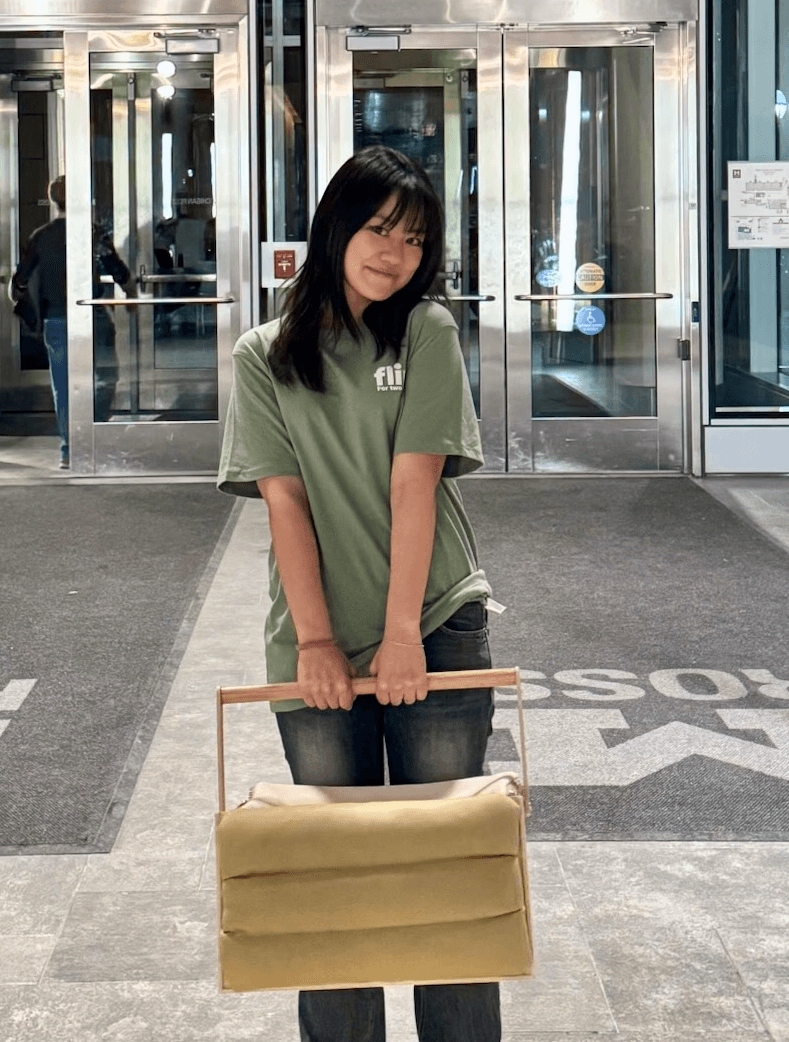
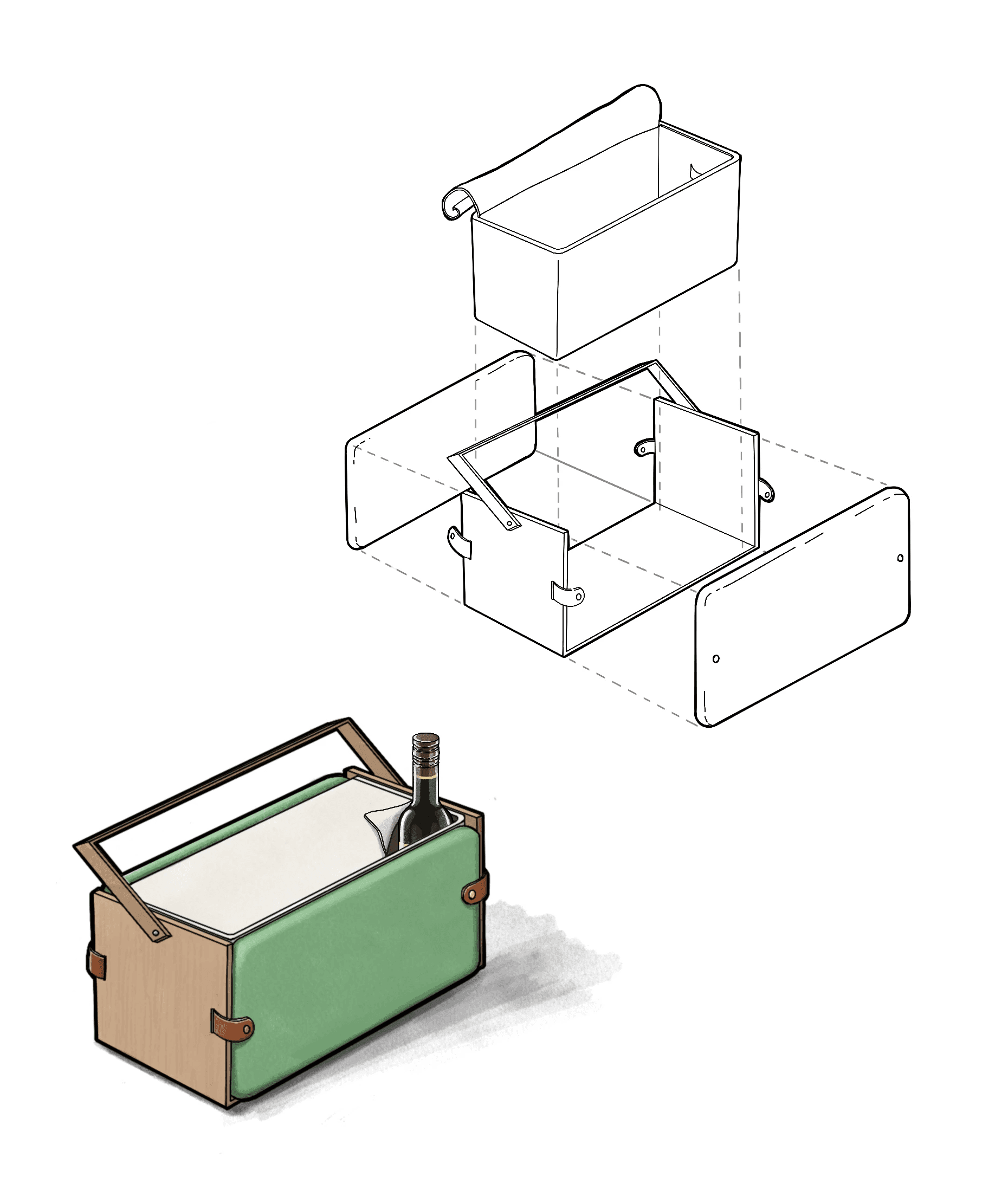
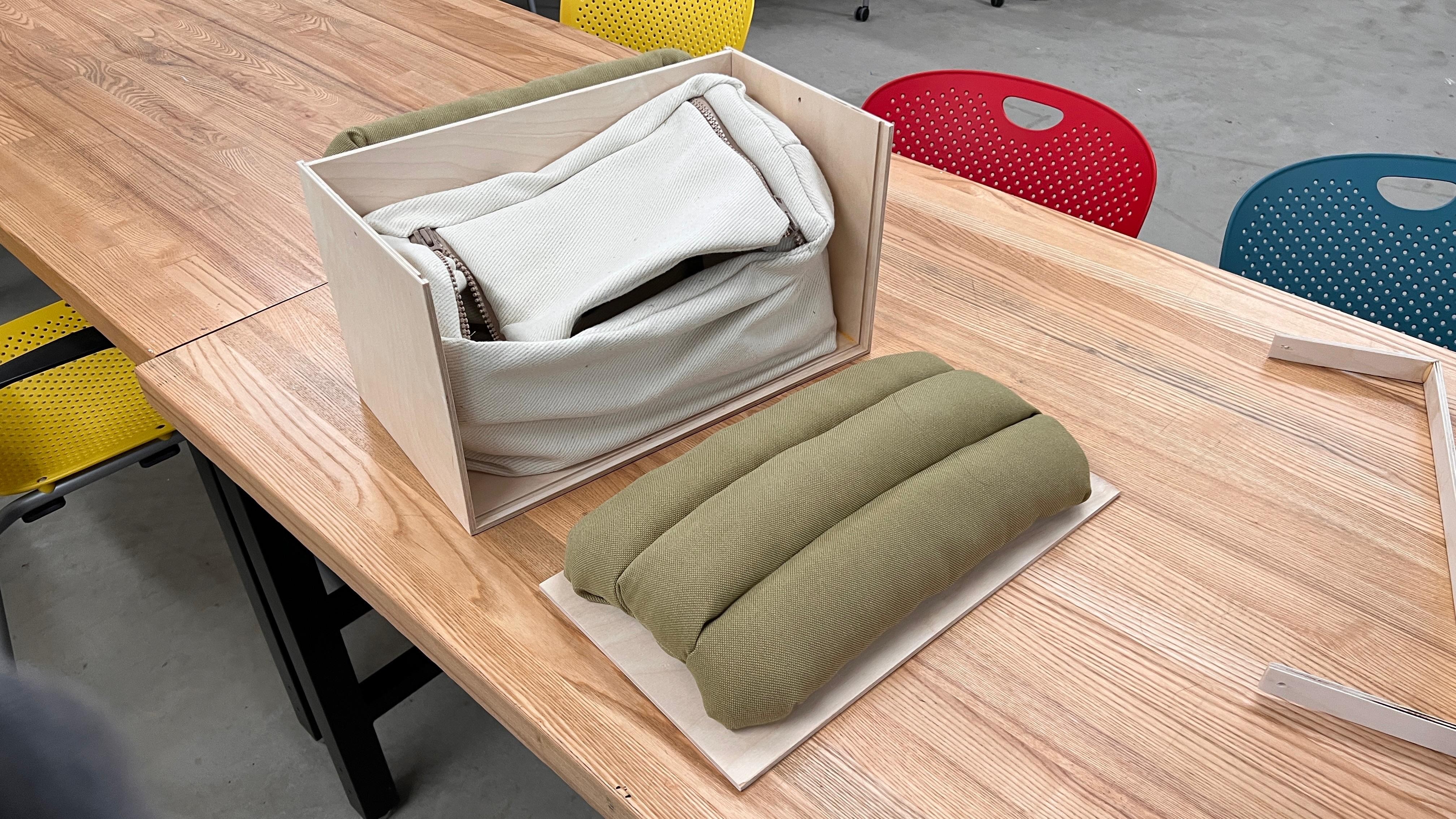
When flipped and put together, Flip compresses into a compact storage unit that houses dining components within a single structural shell.
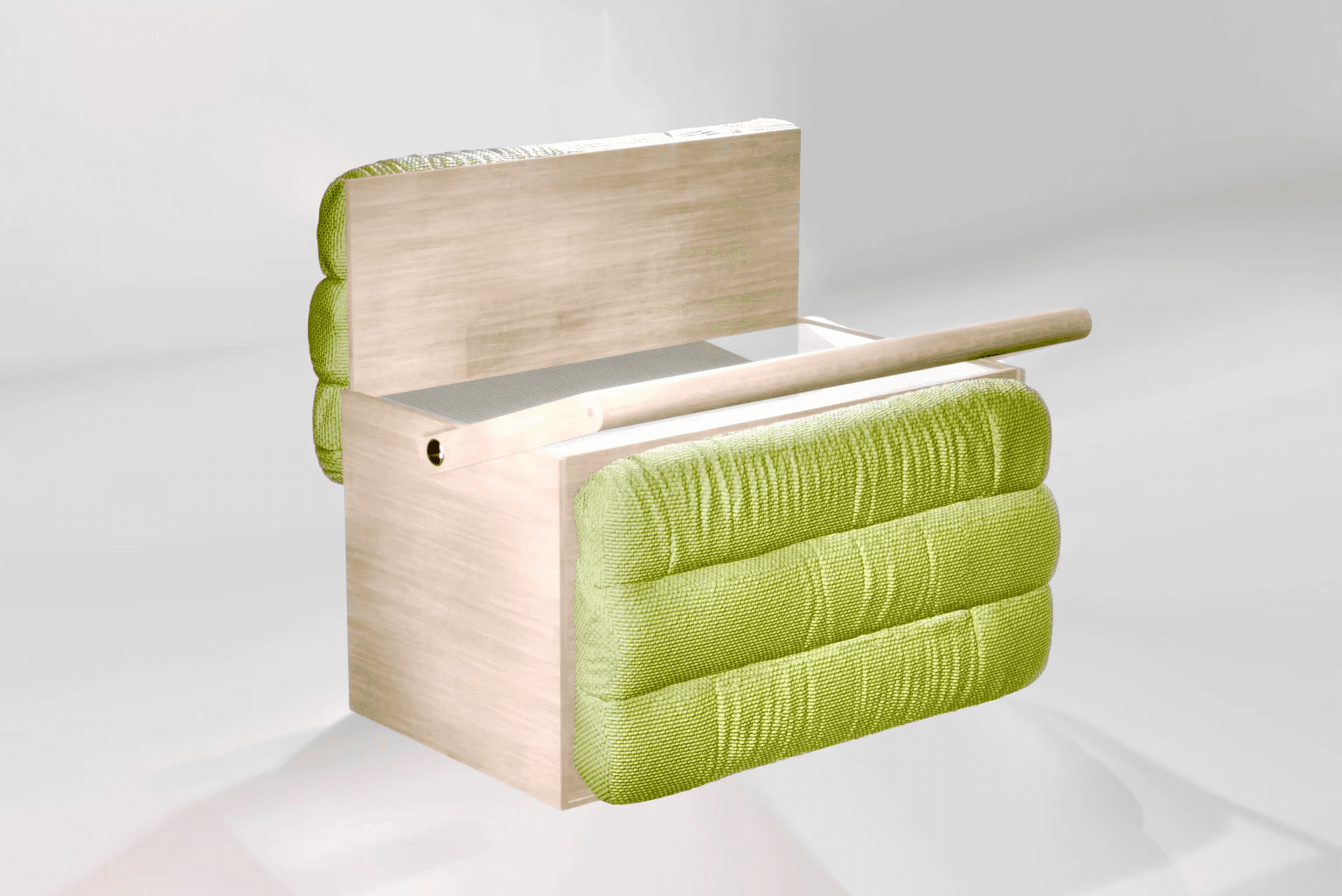
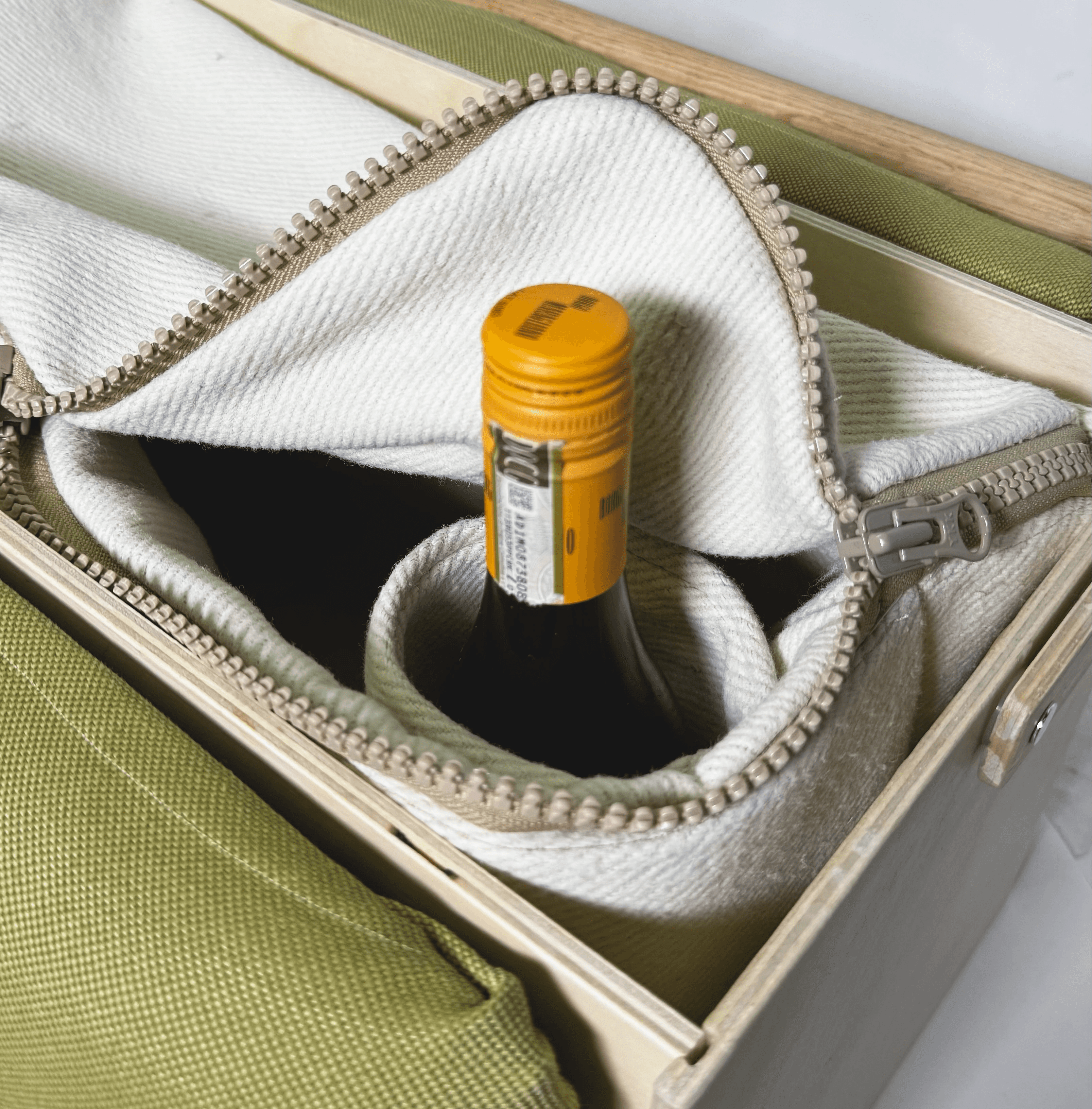
integreated storage
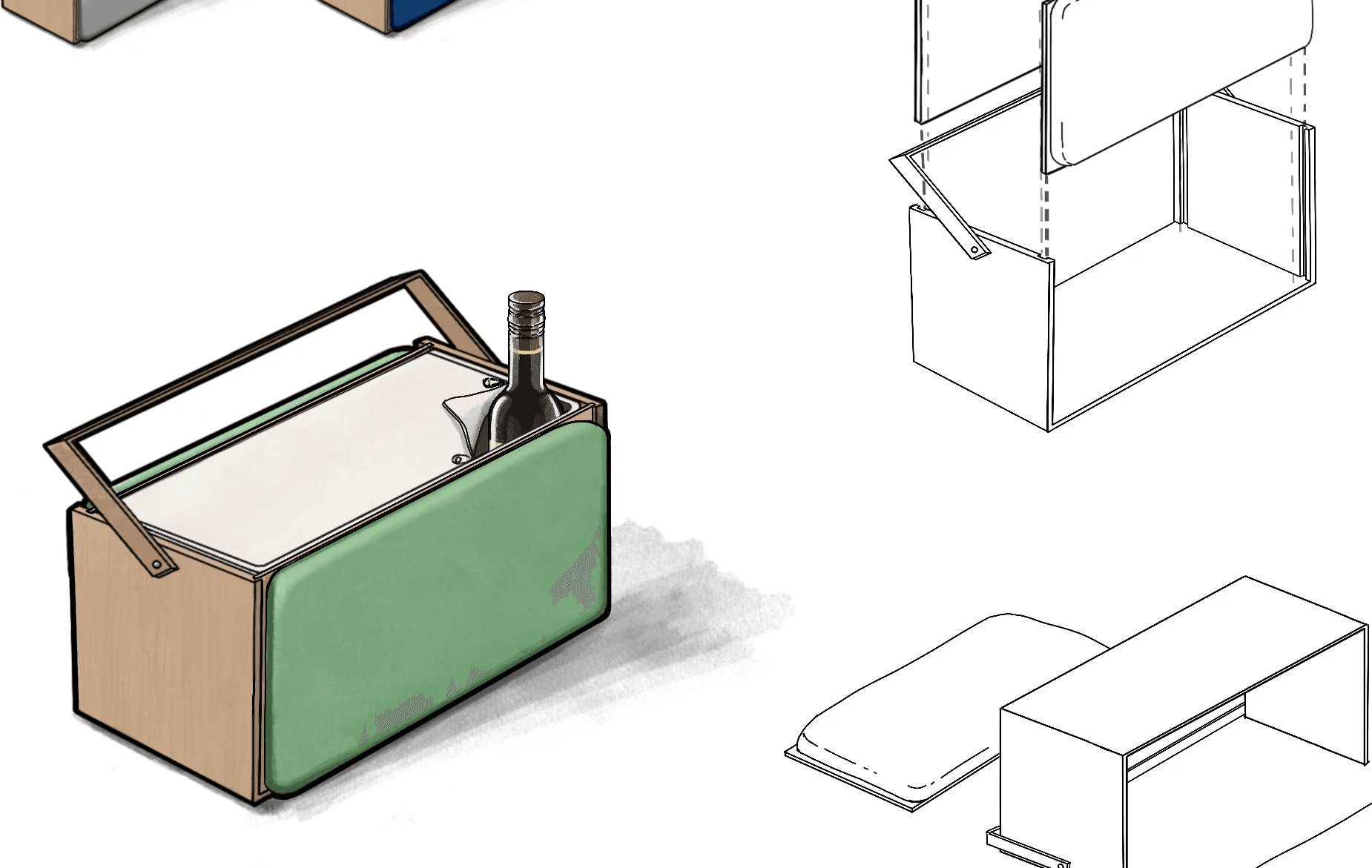
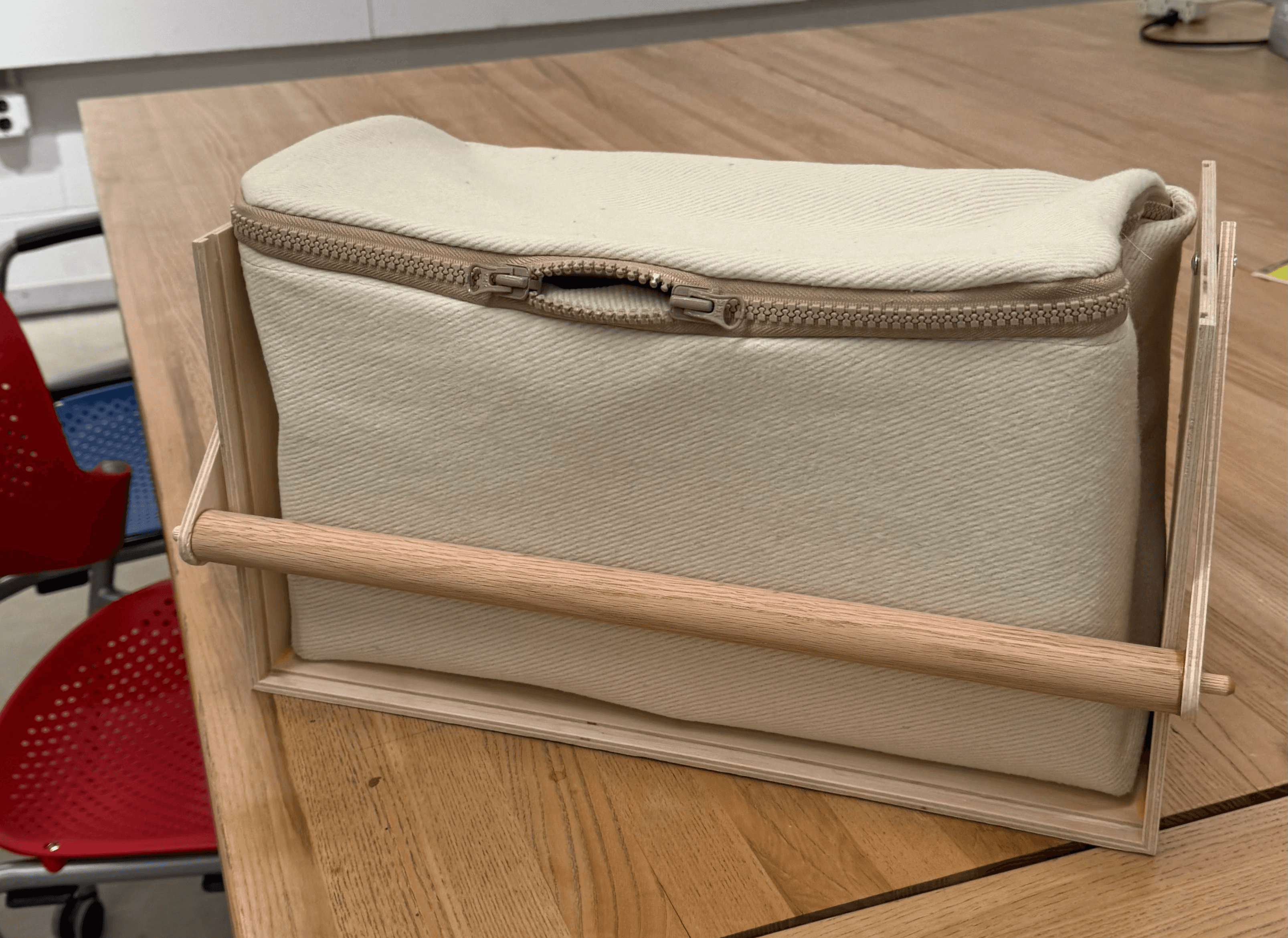
An integrated hemp canvas bag compartment stores food and utensils within the structural frame, eliminating the need for separate containers.
FULL-SCALE prototype
A full-scale prototype was built to validate structural stability, transformation flow, and material integration.
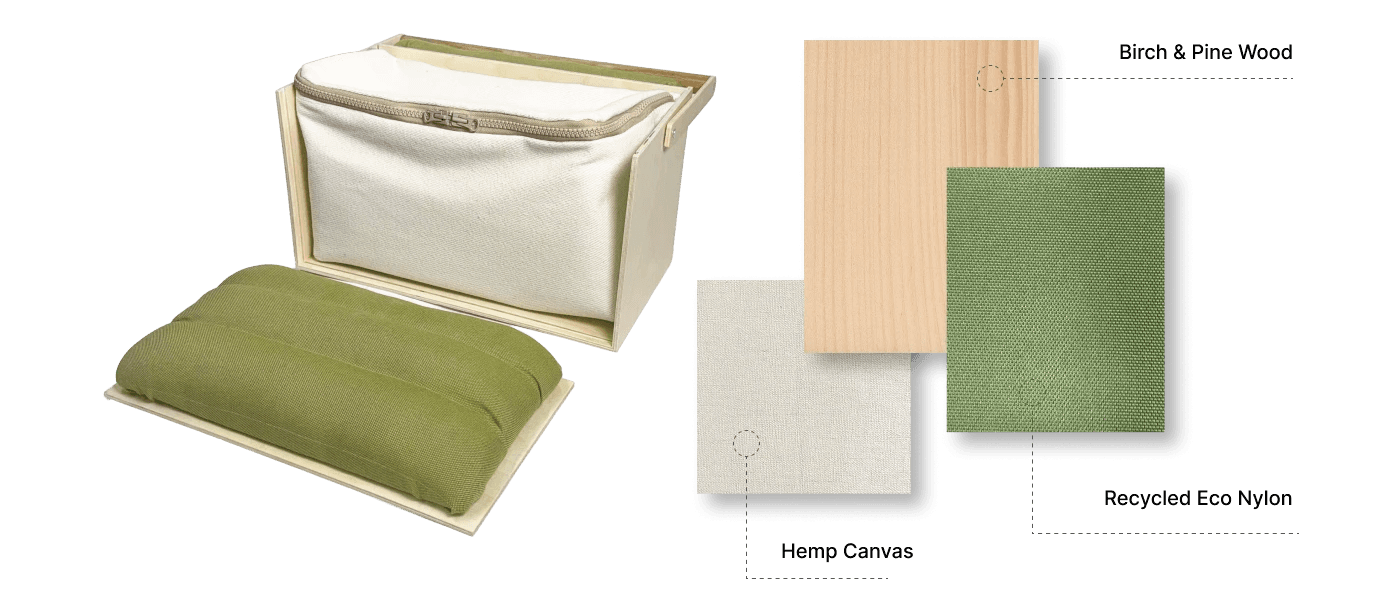
MATERIALS
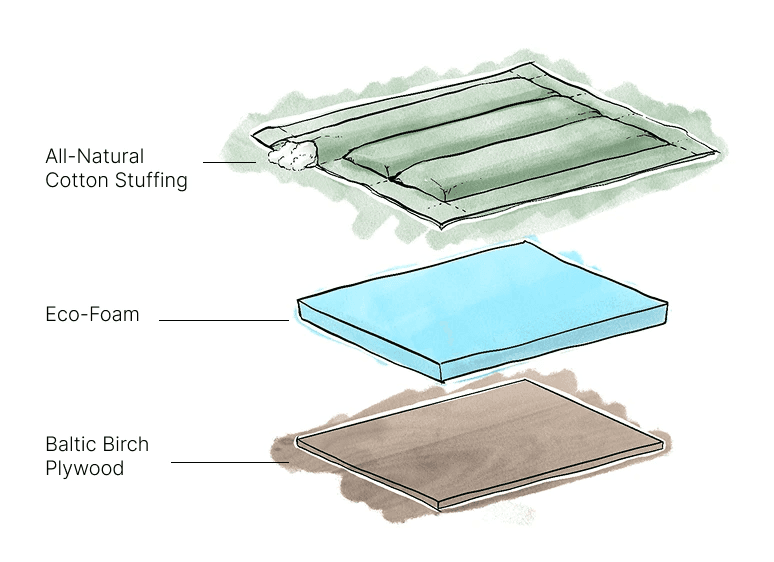
Cushion Support & Leveling
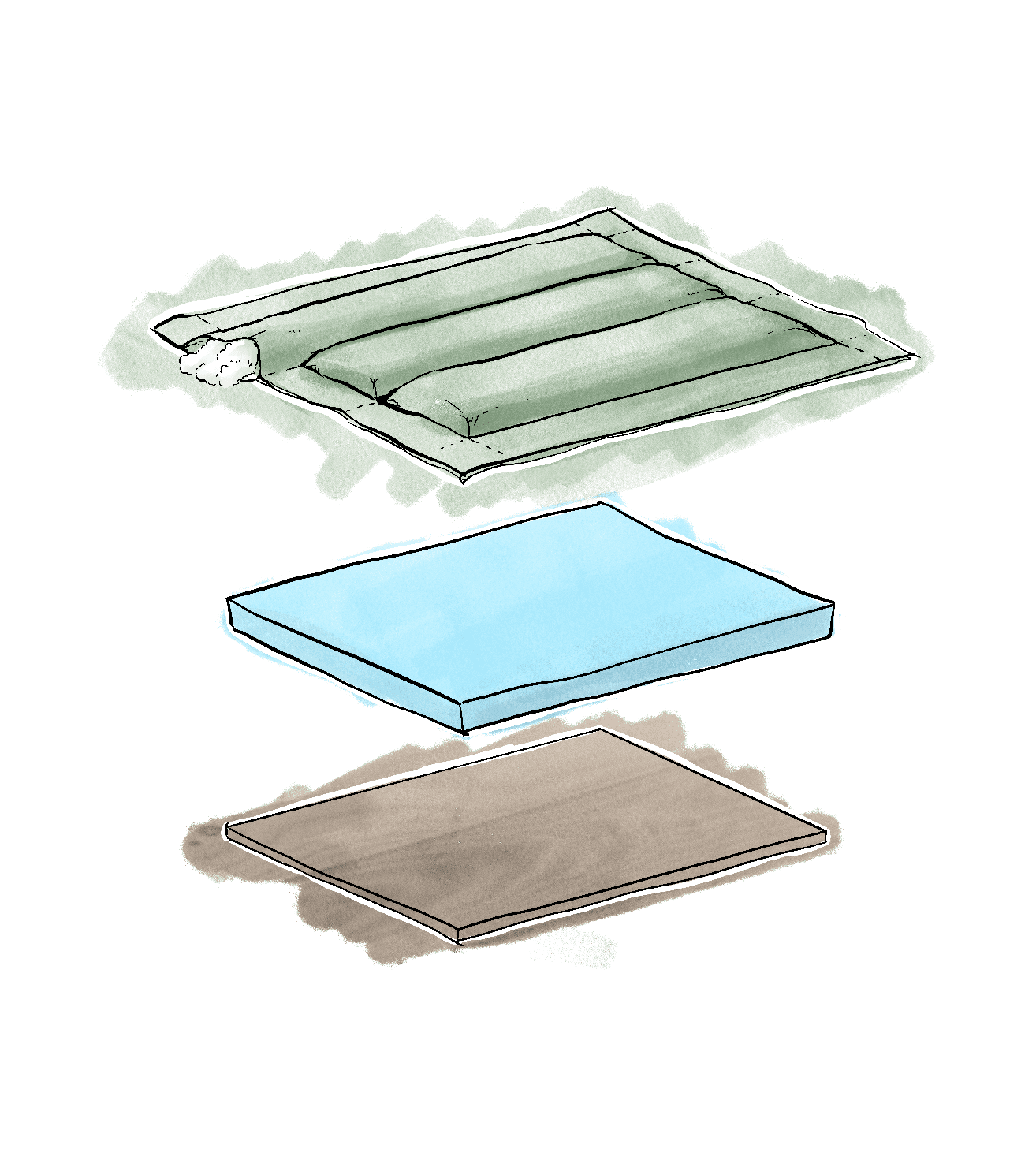
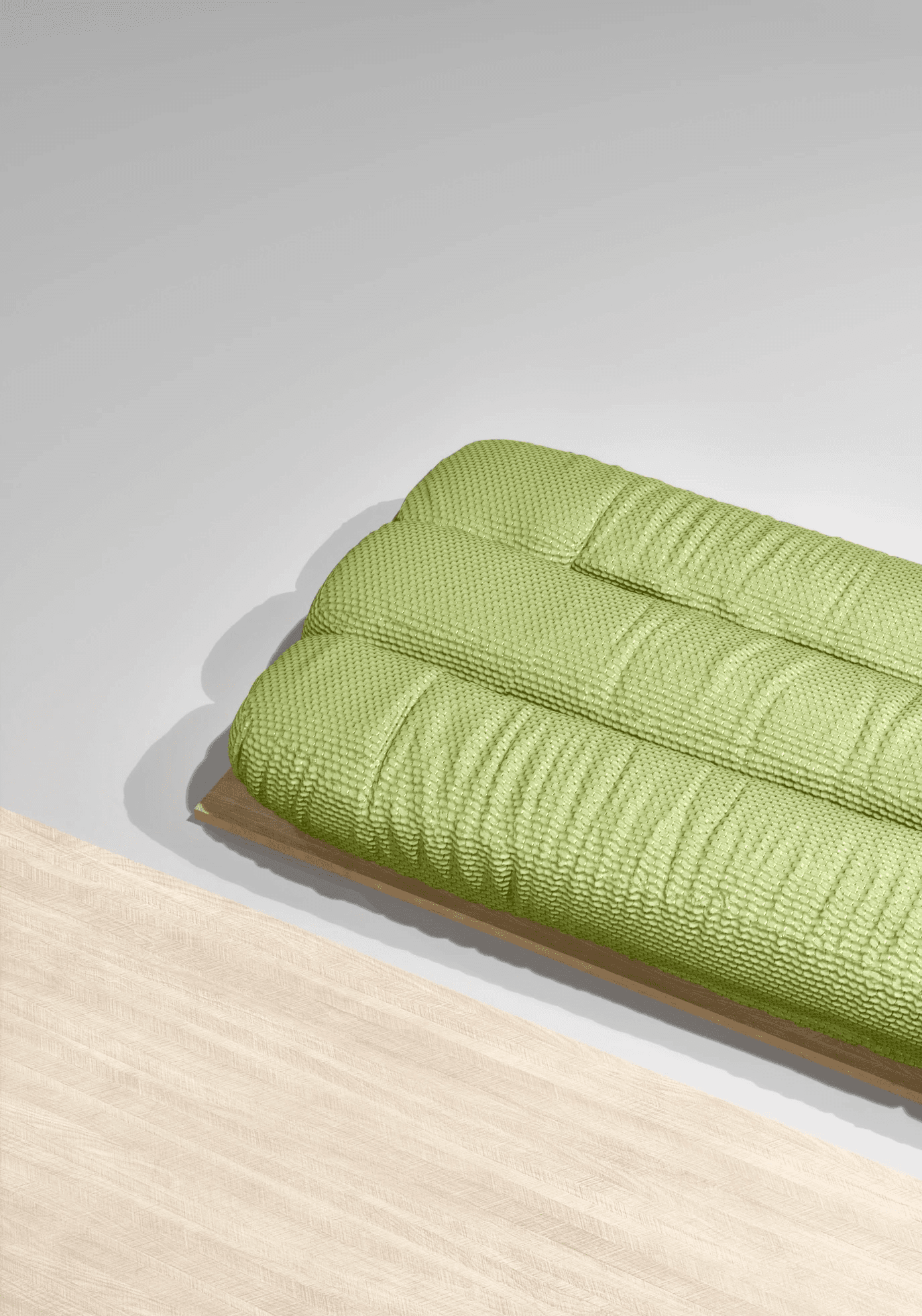
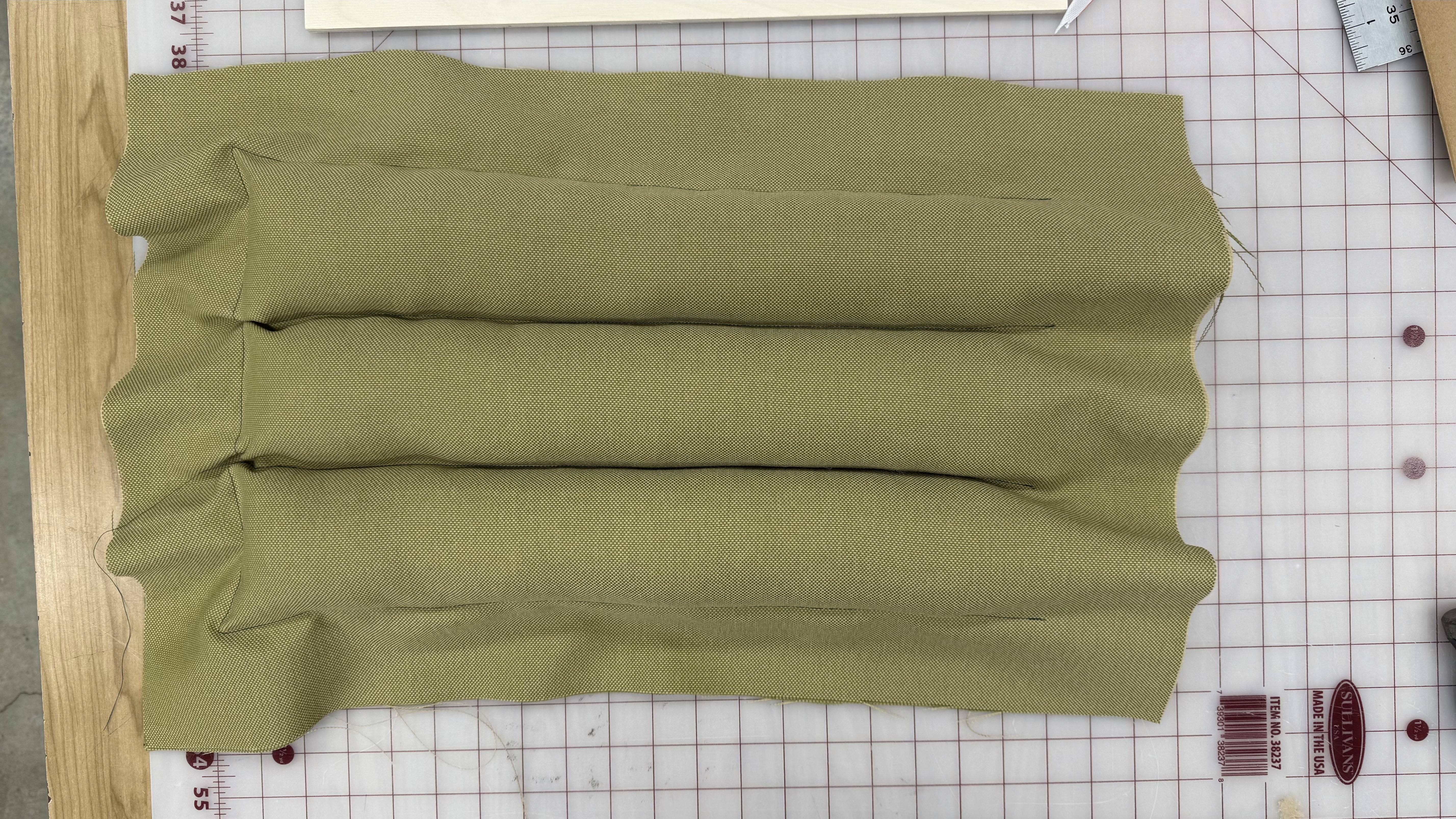
The cushion integrates a layered structure that compensates for uneven ground while maintaining visual continuity with the wooden base.
Shared Capacity
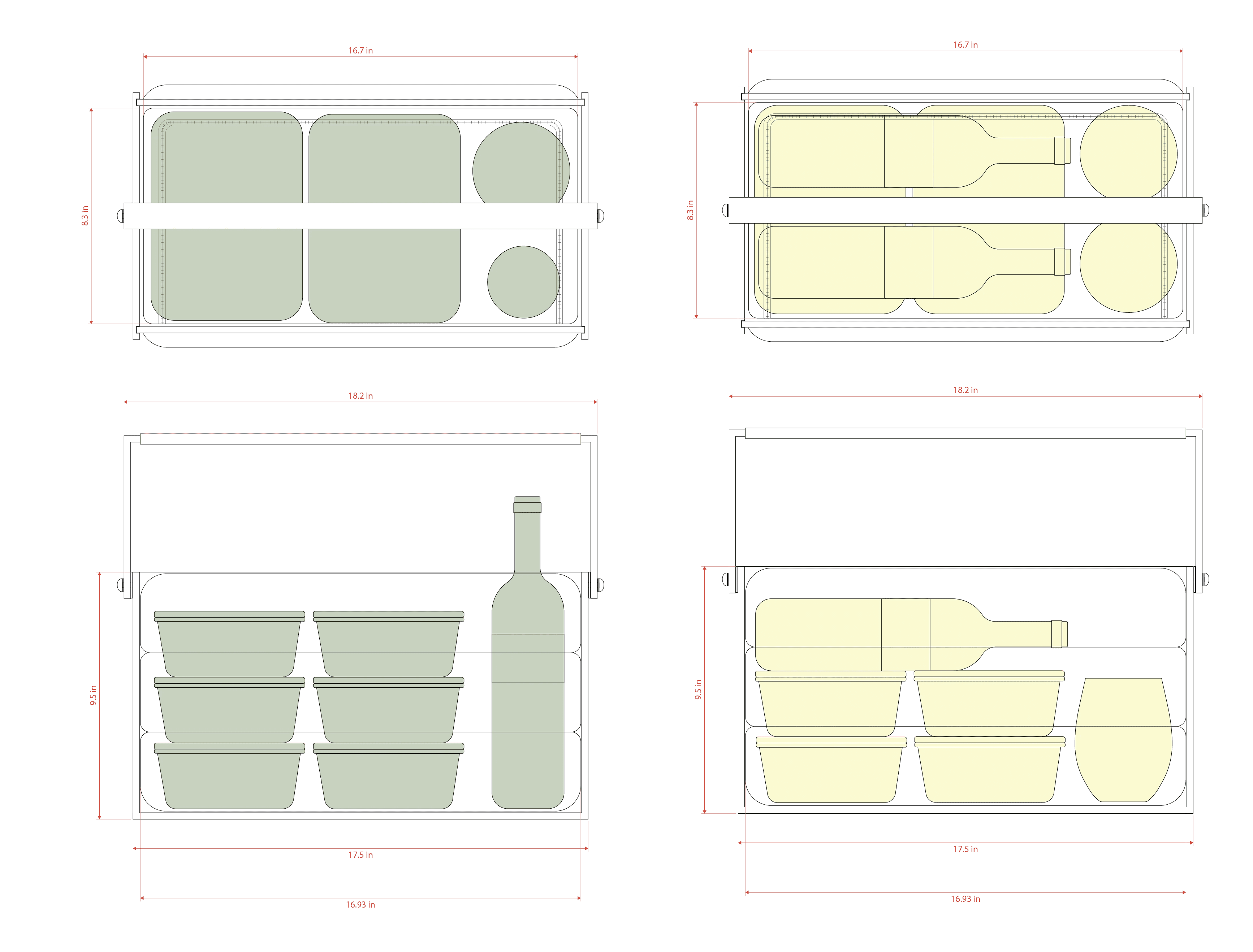
Designed to accommodate a full meal for two, Flip integrates storage space for containers, utensils, and beverages without expanding its external footprint.
Market placement
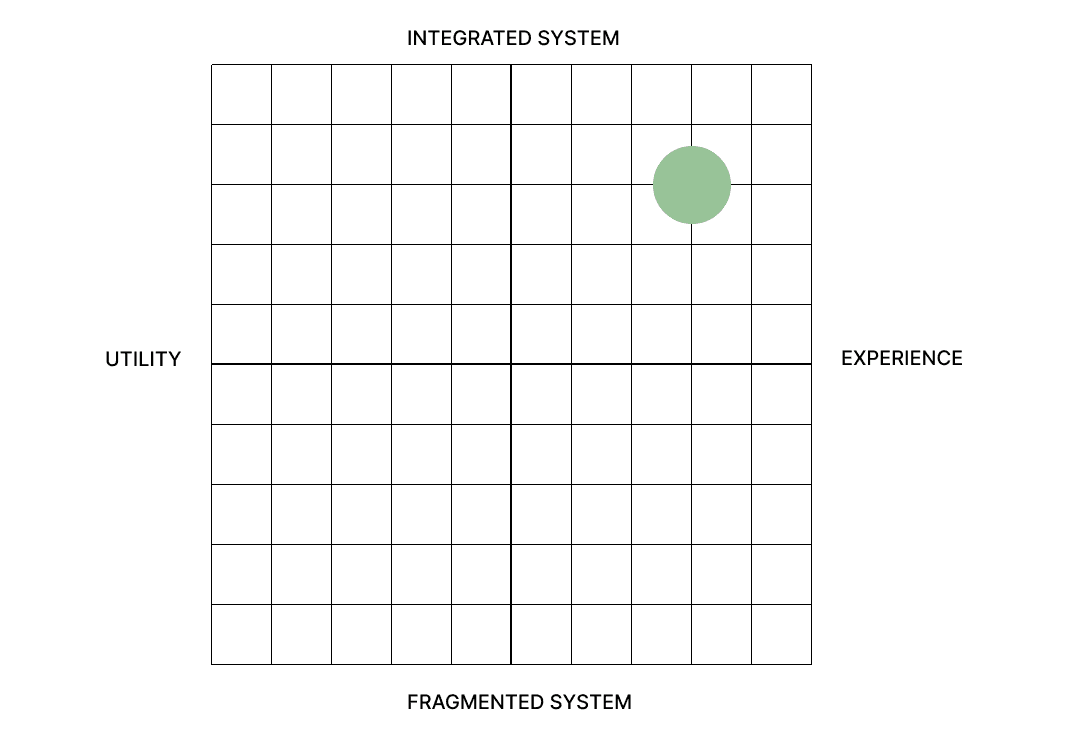
Positioned within a mid-range lifestyle category. Accessible yet elevated, competing with design-forward outdoor accessories rather than camping equipment.
Sales validation
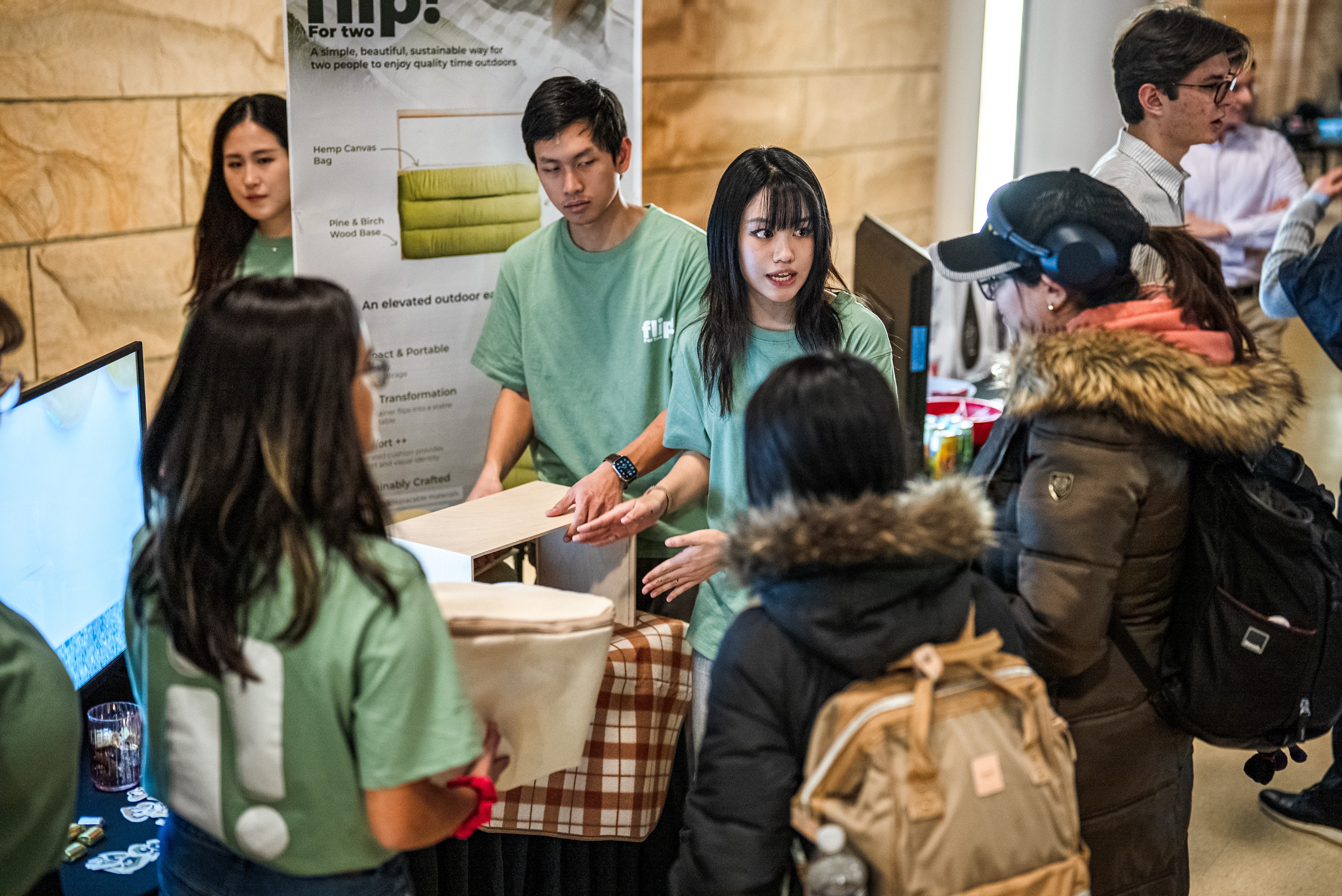
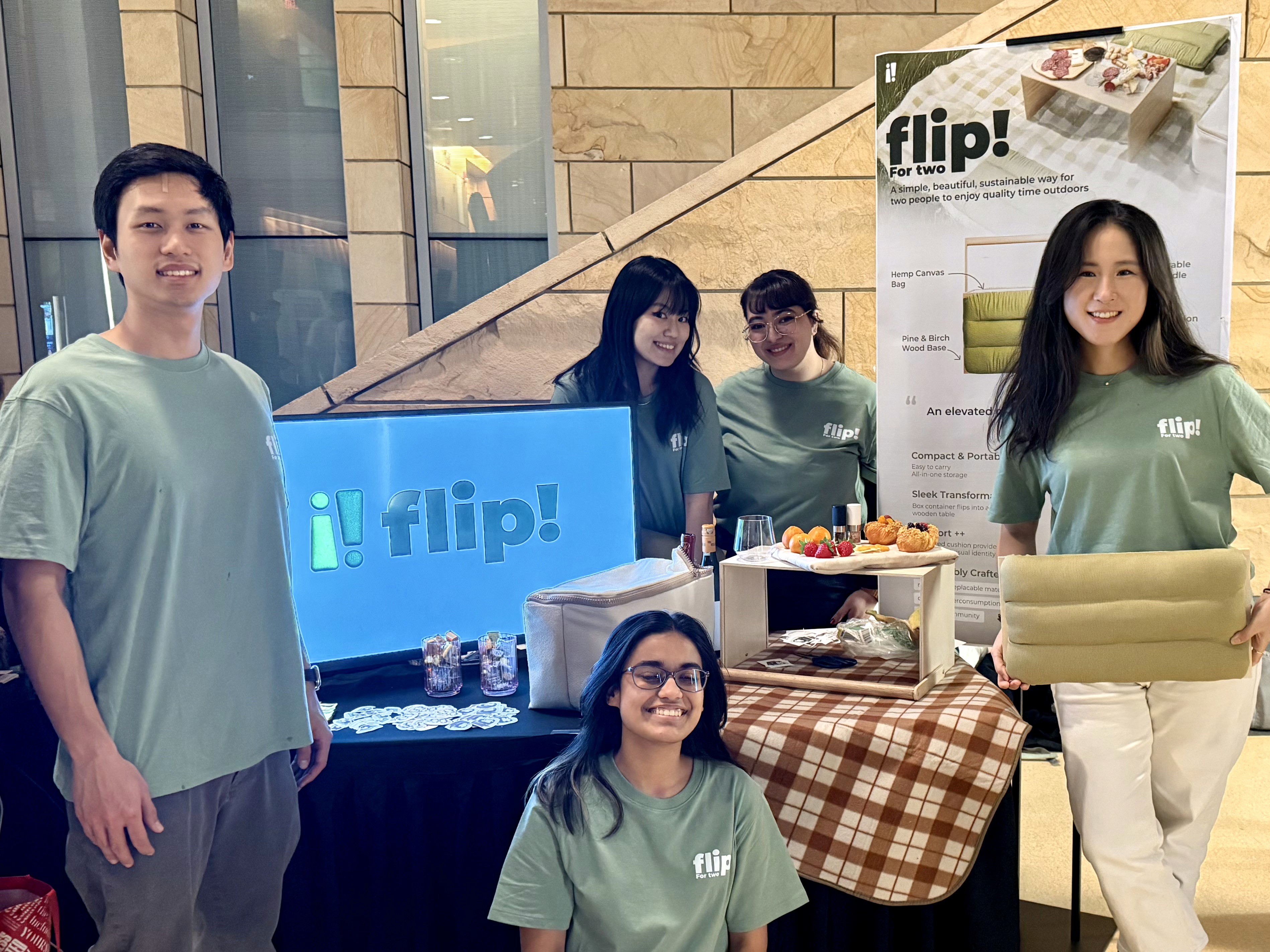
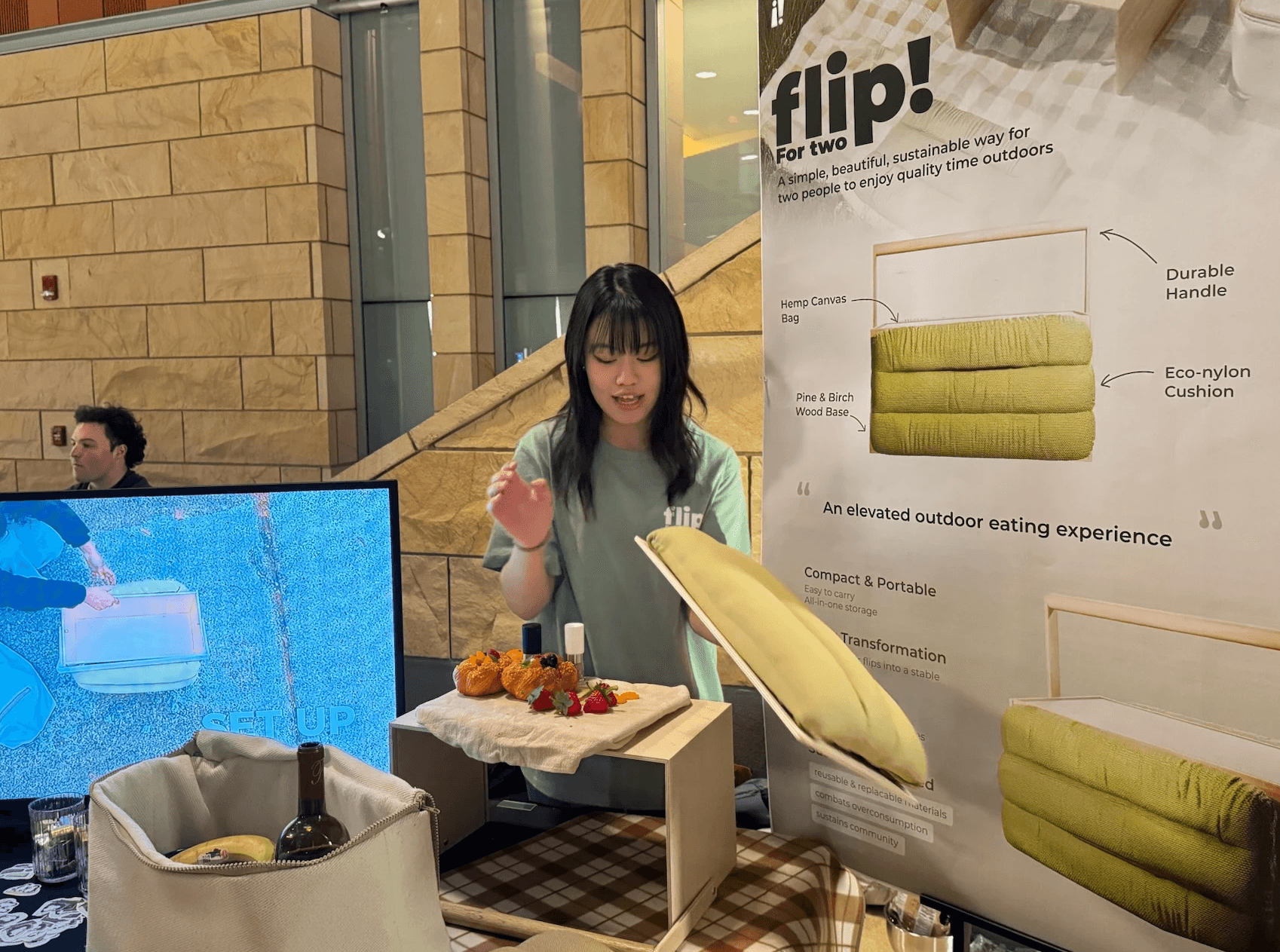
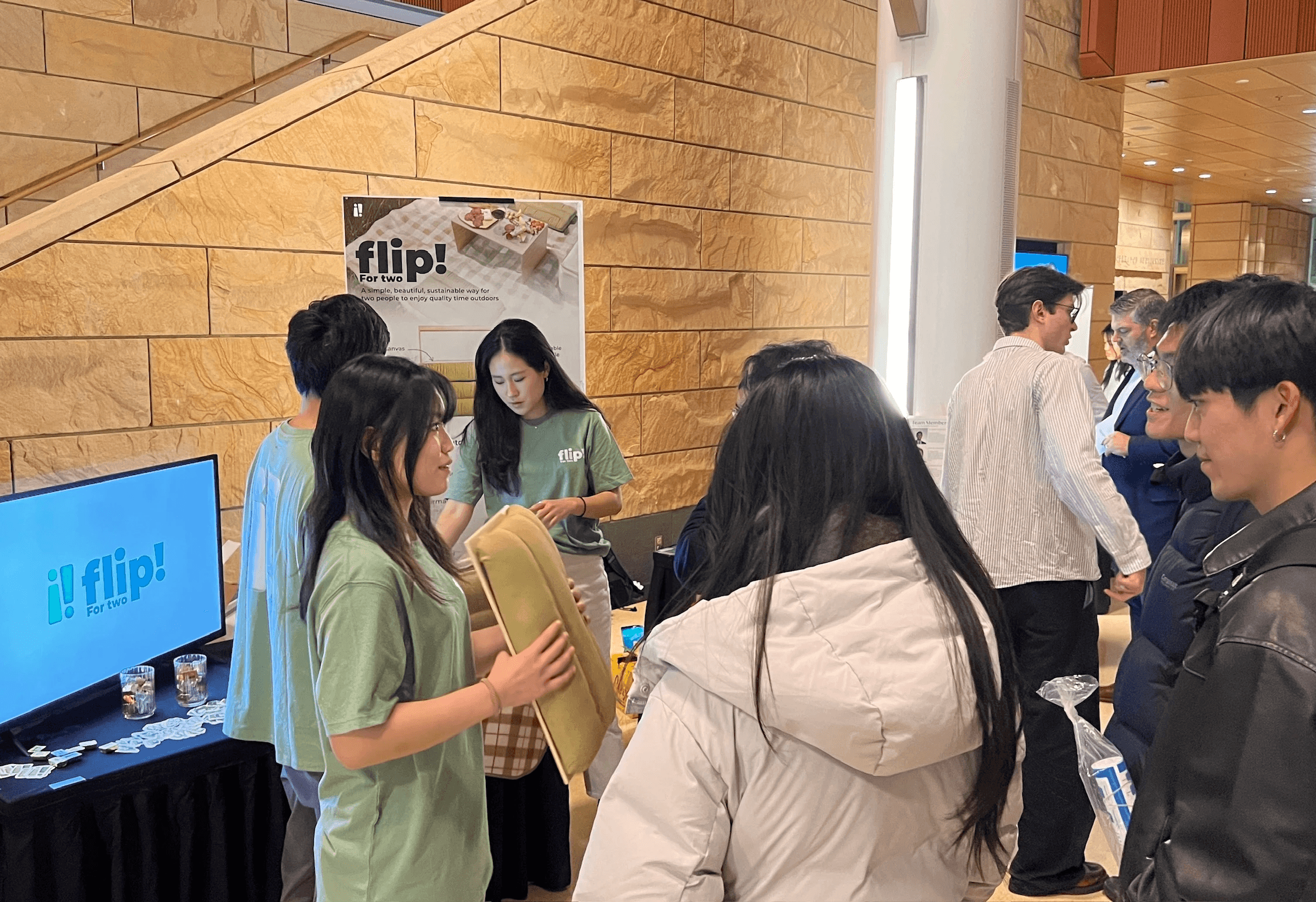
Flip was presented in a live product showcase using a simulated purchase model. Attendees were given a fixed $160 budget and asked to allocate it across competing products they would actually buy.
process.
Observations
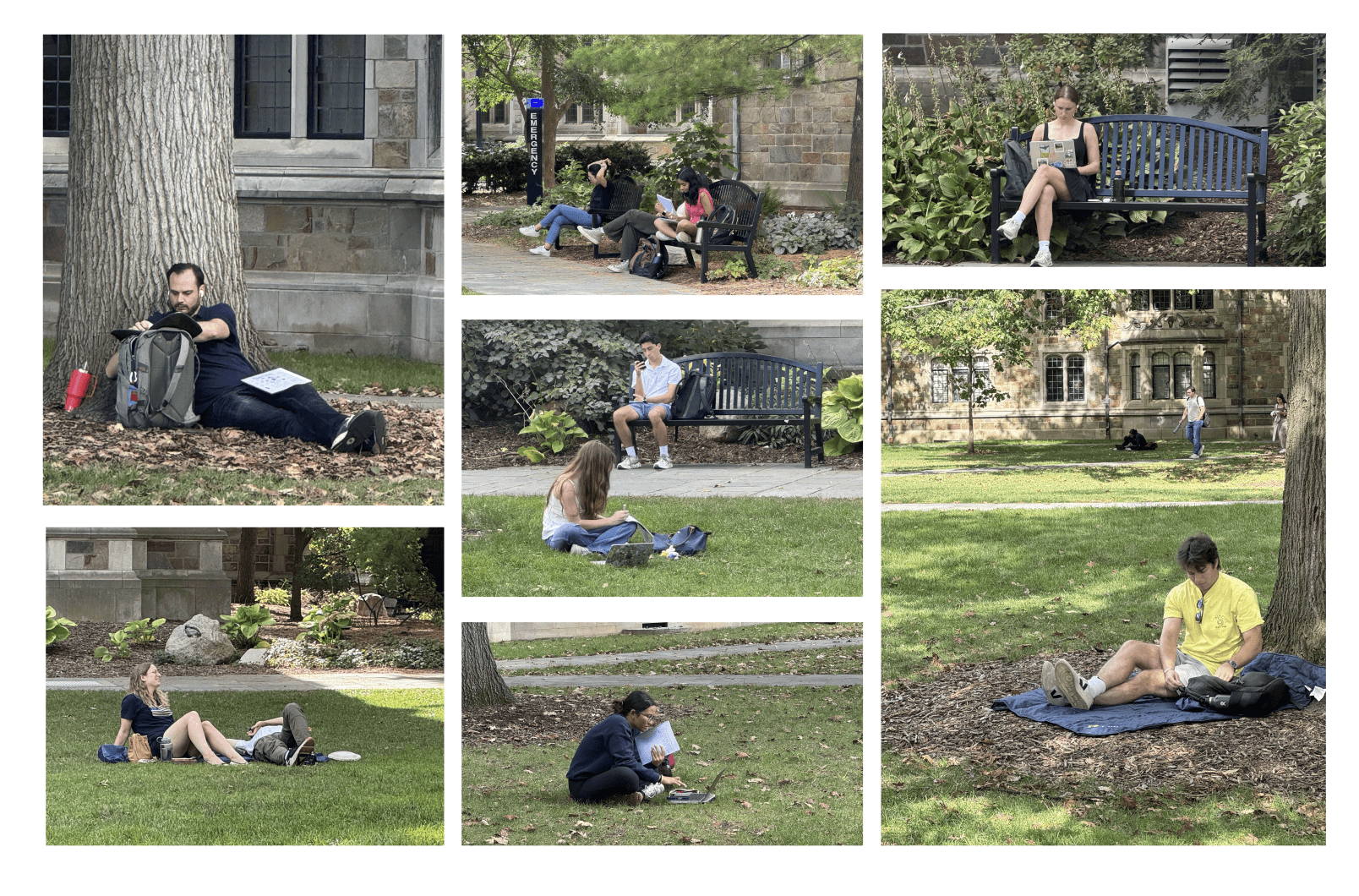
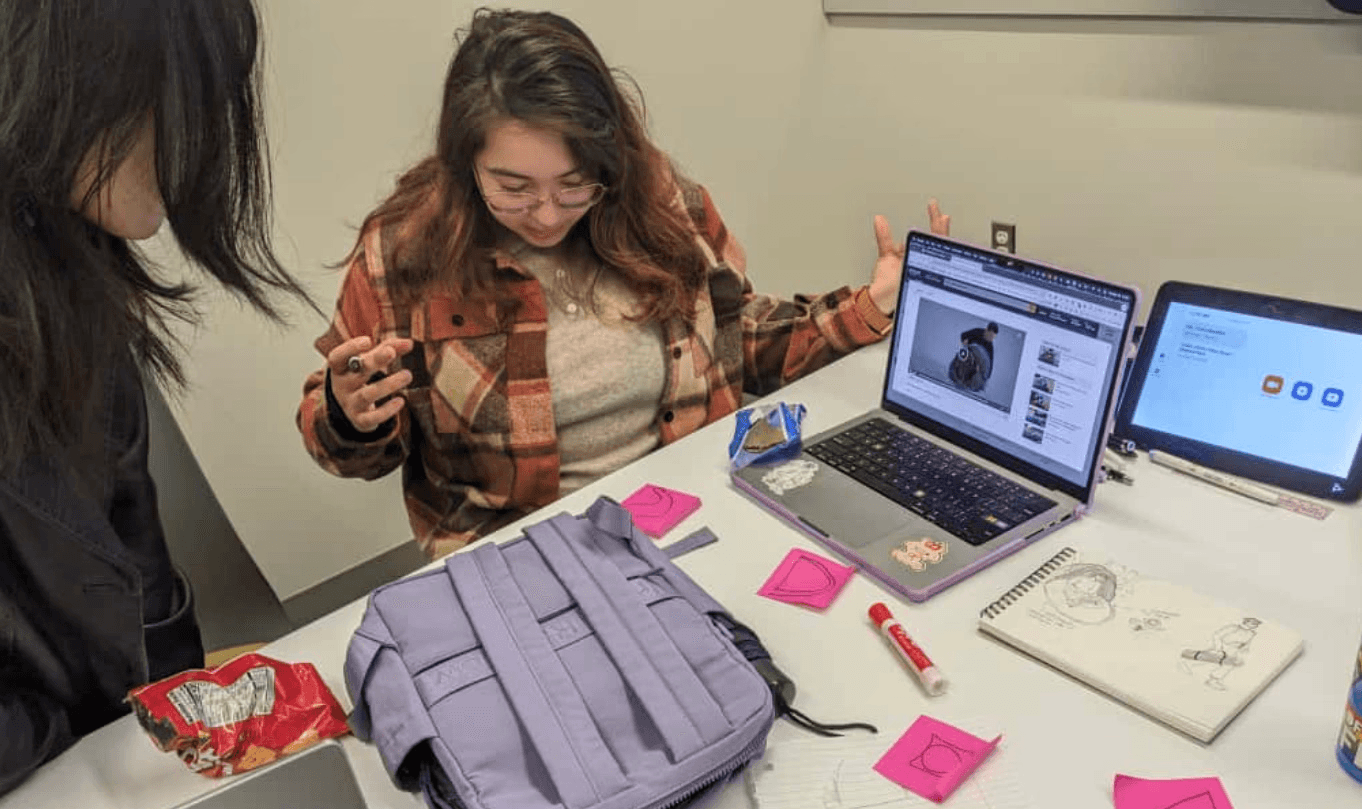
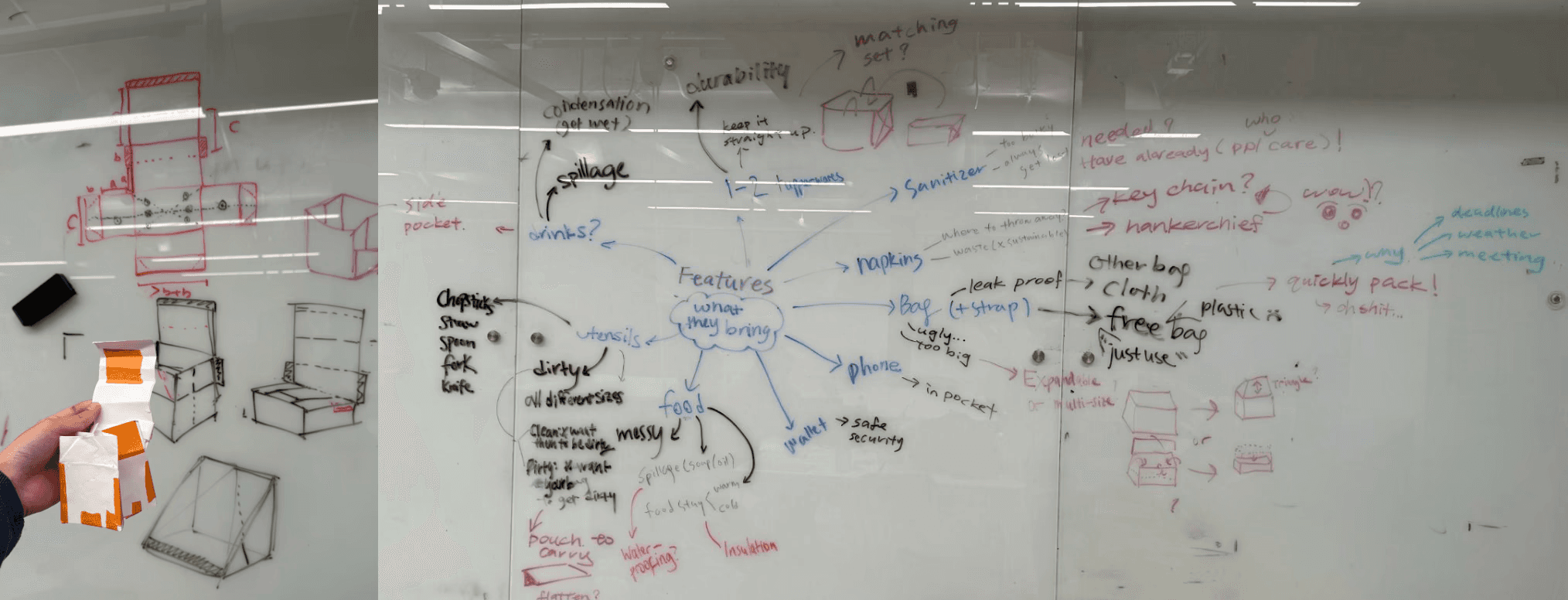
We observed how people use outdoor spaces and conducted interviews to understand behavior patterns. Many worked, studied, or ate outside, yet their setups were improvised and fragmented.
Exploration
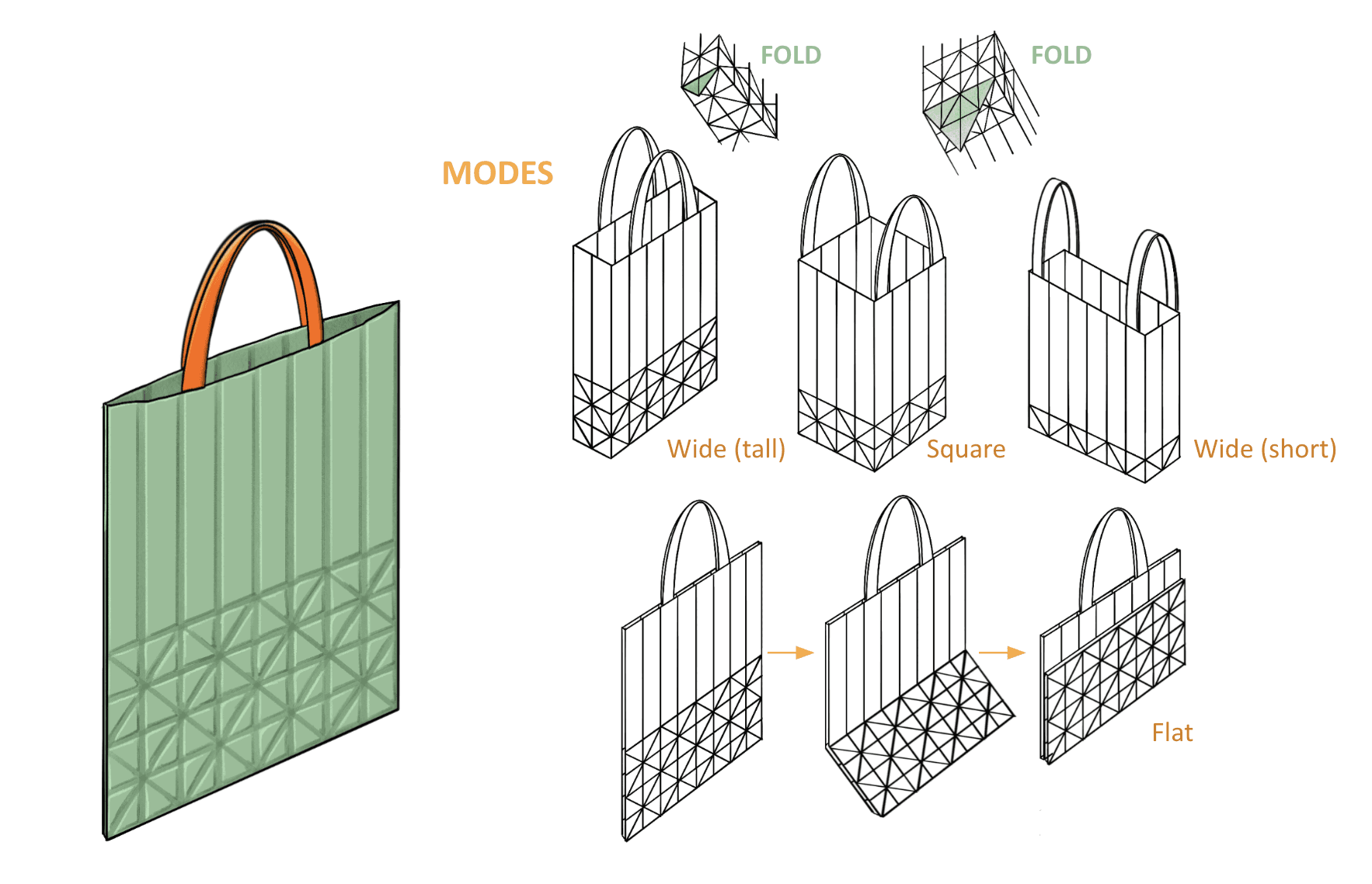
We explored multiple approaches to support outdoor dining, testing different system types and structural directions.
ideation
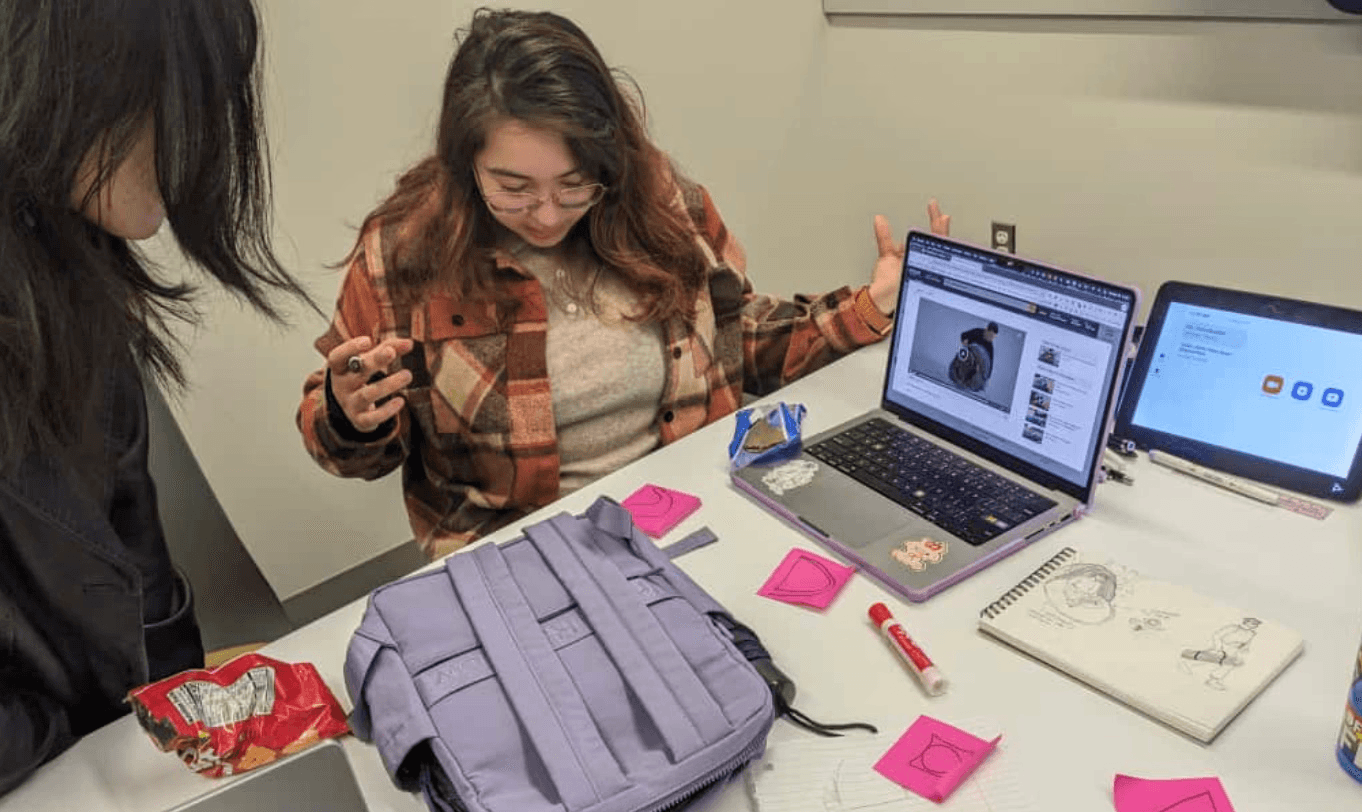
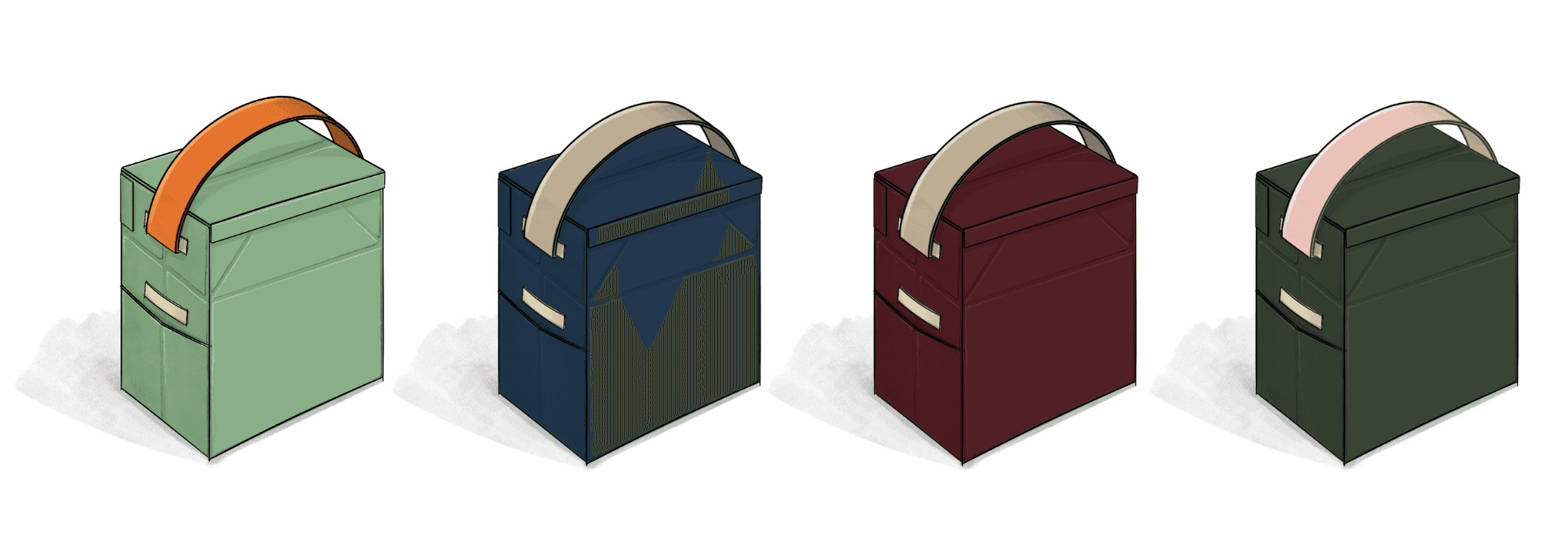
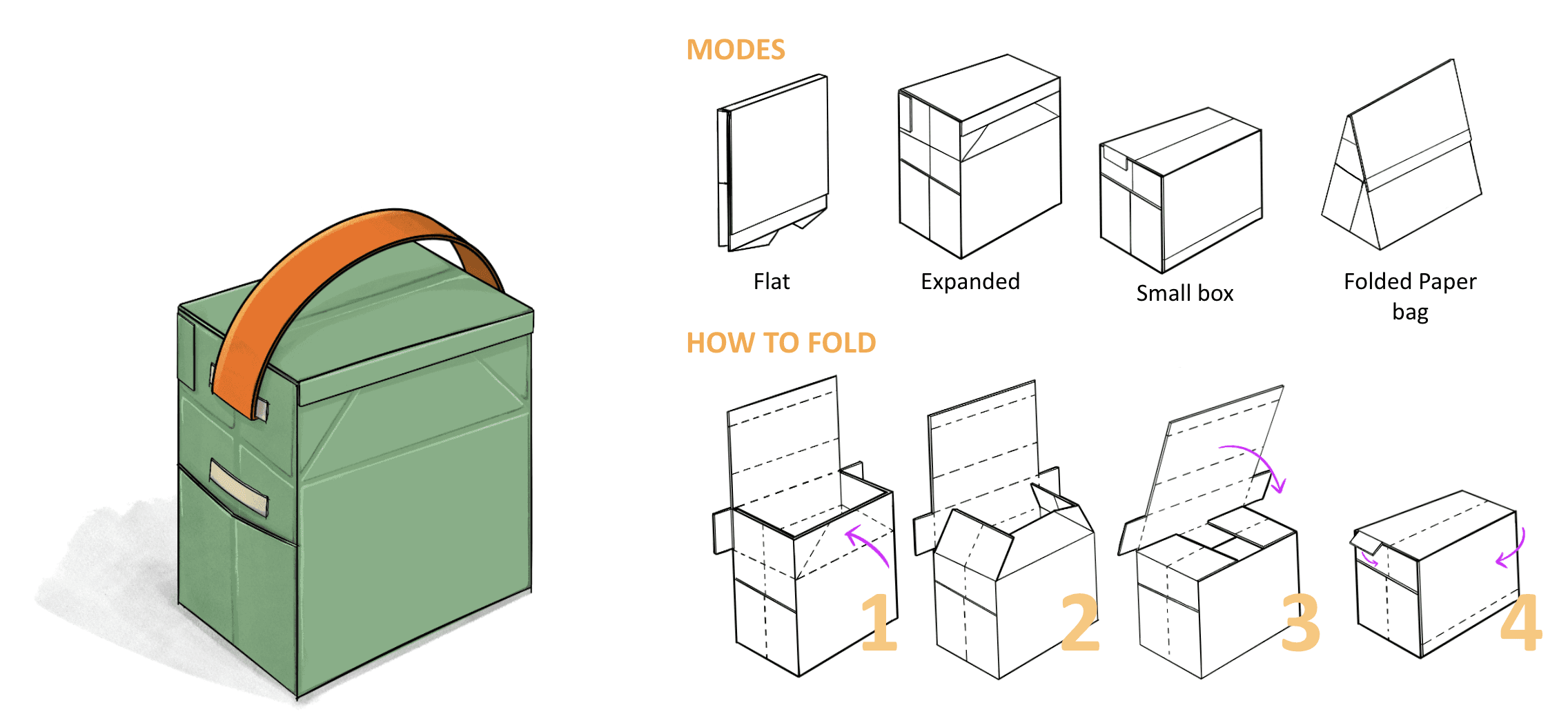
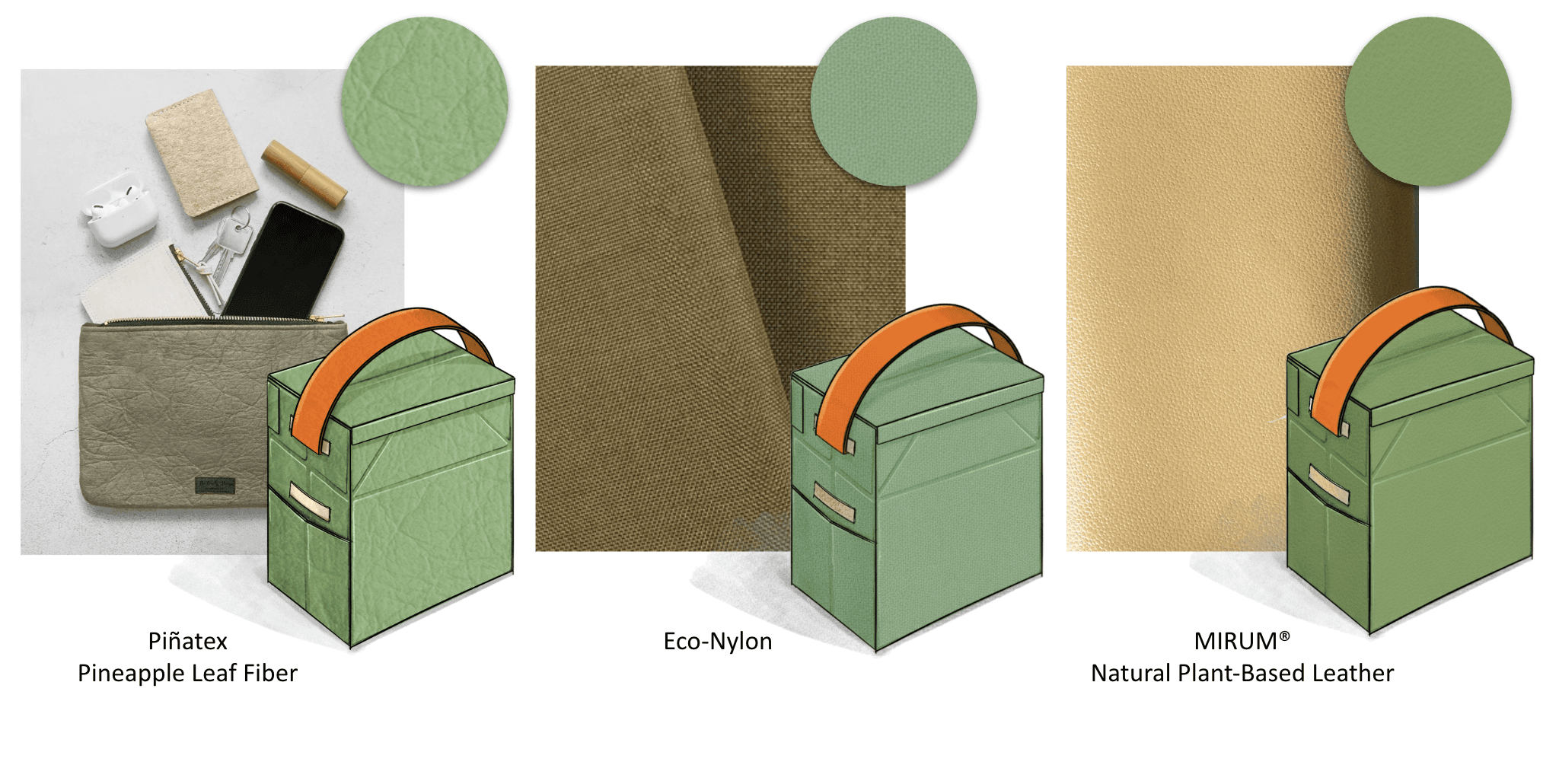
One early concept was a foldable lunch tote that transformed into a portable tray, combining storage and surface in a lightweight form.
User testing
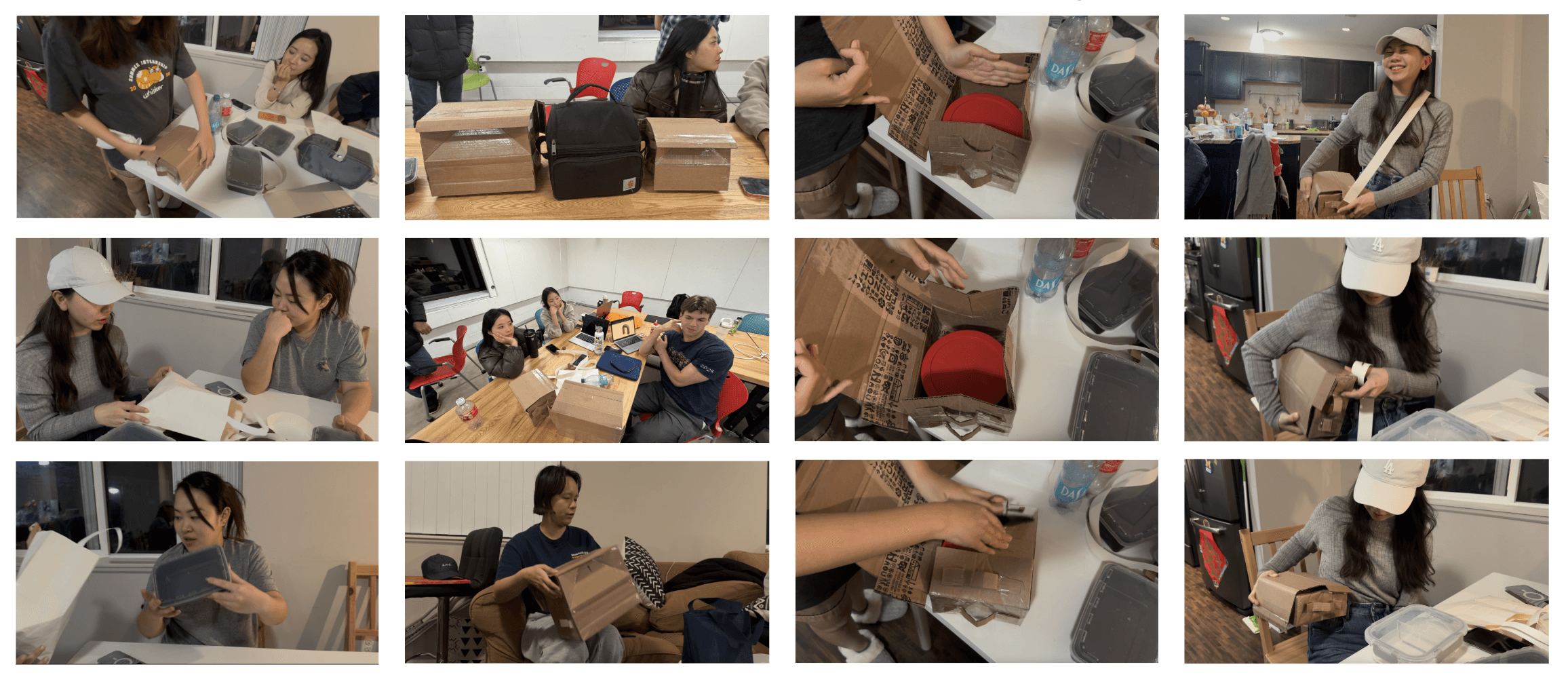
User testing revealed that while portable, the tray-based system lacked stability and did not fully elevate the shared outdoor experience.
DESIGN REFINEMENT
We reframed the direction toward creating an elevated outdoor experience: identifying the need for structural stability, shared surface space, and integrated comfort.
Prototyping
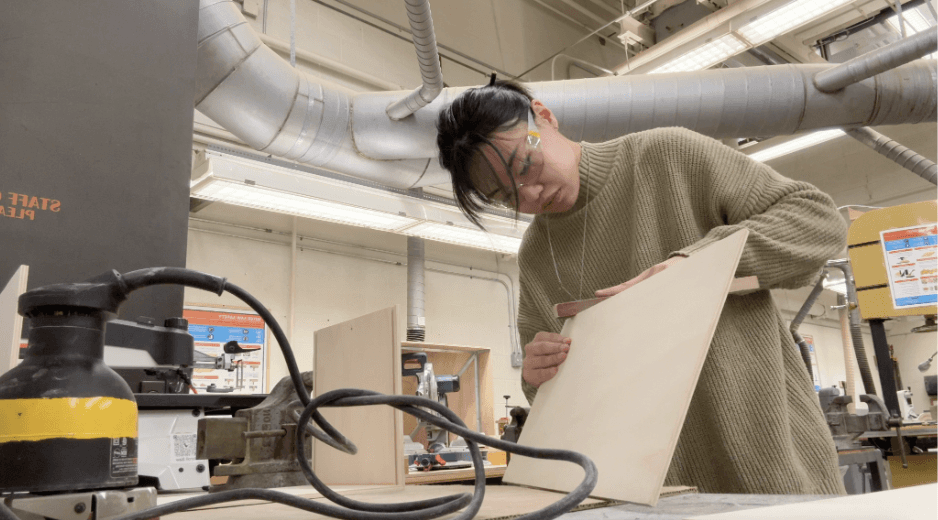
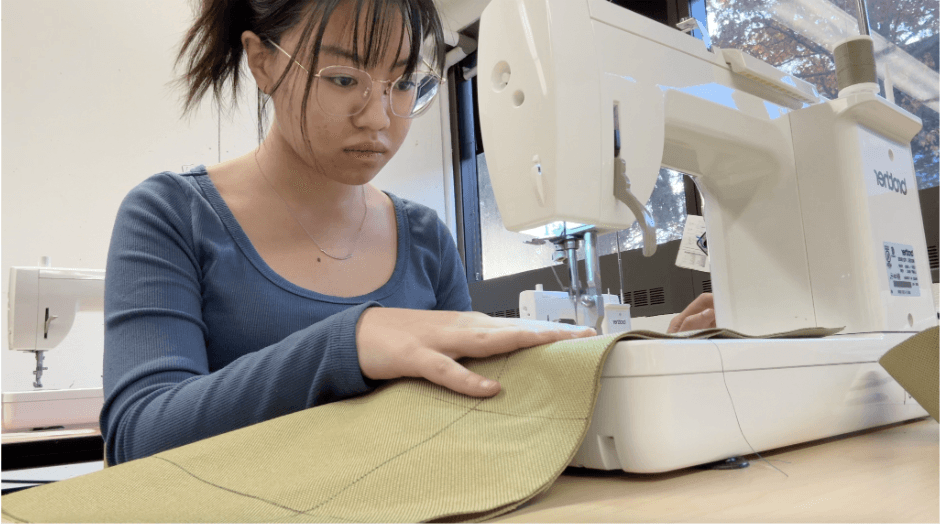
From wood fabrication to sewing and cushion experimentation, prototypes tested structure, handles, material durability, and comfort layering. Iterations refined assembly logic and stability.
multi-disciplinary collaboration
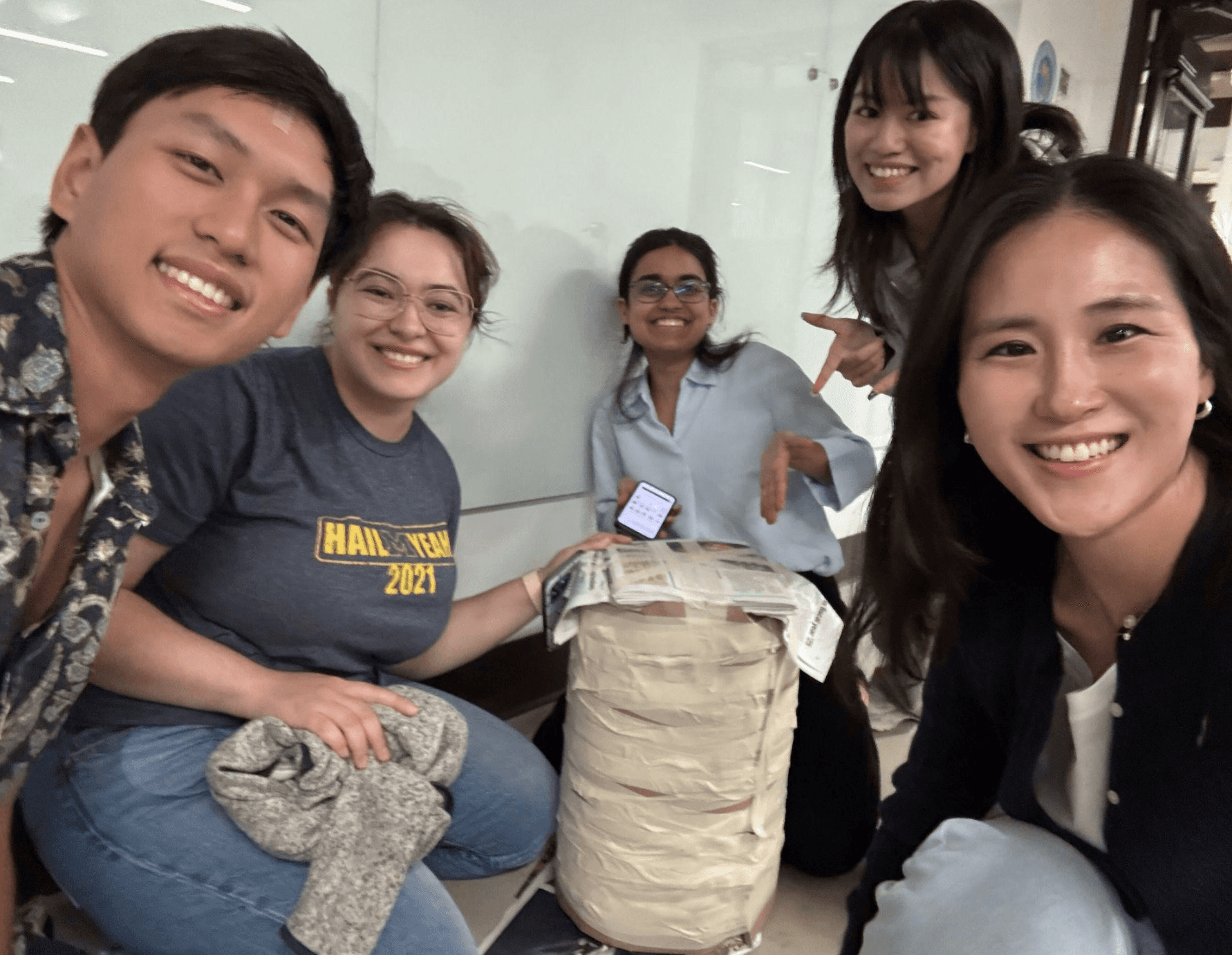
The project was developed alongside business and IOE collaborators, coordinating product strategy, cost modeling, and fabrication while managing cross-functional workflows.